
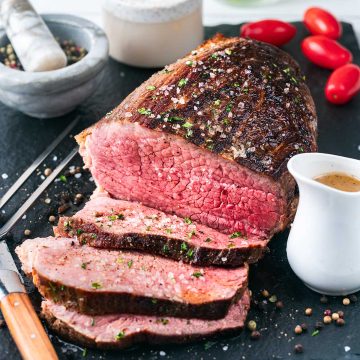
This reverse sear prime rib roast cooks low and slow at 200°F, rests, then hits a 550°F oven for a crackly, salty crust. You get rosy pink slices from edge to edge with barely any gray band. And because the roast rests before the sear, you get a built-in window to finish your sides.

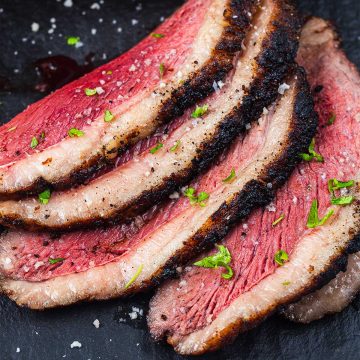
Reverse sear prime rib gives you rosy pink slices from edge to edge, with barely any gray band and a crackly, salty crust.
The roast cooks low and slow at 200°F, rests, then finishes in a 550°F oven right before dinner. That rest gives you a built-in window to bake the rolls and potatoes.
Why Reverse Searing Works on a Roast
A classically cooked prime rib cooks from the outside in. By the time the middle is pink, you’ve got an inch of grey meat around the edge.
With reverse sear, the roast cooks evenly. For pink all the way through, it’s the best way to cook prime rib in the oven.
Cooking on low also reduces the carryover cooking, so what you pull the roast at is closer to what you serve at.
Ingredients

- Standing Rib Roast: This is where the magic happens, folks. A standing rib roast, also known as prime rib, is a rich, flavorful cut of beef that comes from the primal rib section of the cow. It's marbled with fat, which melts during cooking, infusing the meat with a mouthwatering, buttery flavor.
- Salt: Salt might seem like a humble ingredient, but it's a game-changer when it comes to bringing out the flavors of your prime rib. Use either sea salt or kosher salt.
- Black Pepper: Freshly ground black pepper will have the best flavor.
How to Buy a Standing Rib Roast
- Don’t let “prime rib” confuse you. That’s the cut name, not the grade. Most grocery stores sell USDA Choice. USDA Prime has more marbling and a much higher price tag. I’ve cooked both with great results.
- Ask for the first cut. Your butcher may call it the small end or loin end (ribs 10 through 12). It has a larger center eye and less of the fatty cap. The chuck end (ribs 6 through 9) has more fat, with plenty of flavor in those outer muscles.
- Plan for your crowd. A 10-pound bone-in rib roast serves 20, assuming you’ve got plenty of holiday sides.
Your Prime Rib Game Plan for Christmas Dinner
Getting your holiday timeline right is hard. I love that the rest on this reverse-sear prime rib gives me a built-in window for cooking my sides.
For a 5:00PM dinner, here is what my timeline looks like.
- 1 to 3 days before: Season the roast. Set it on a rack set on a rimmed baking sheet and refrigerate.
- 10:30 AM: Remove from the fridge and let it sit at room temperature.
- 11:30 AM: Put it in a 200°F oven, fat side up.
- Around 3:00 to 3:30 PM: When it reaches 120°F to 125°F, pull it out and tent with foil.
- 3:30 to 4:30 PM: Time for the sides!
- 4:30 PM: Turn the oven up to 550°F.
- 4:45 PM: Return the roast to the oven for 5 to 10 minutes, until deeply browned.
- 5:00 PM: Carve and serve!
If it finishes ahead of schedule, it can rest tented for about 90 minutes and still be warm inside when you put it back in for the sear.
I also like to keep a few sides out of the oven altogether. Crockpot Cheesy Potatoes or Crockpot Mashed Potatoes are always on my menu. And if you’re serving Make-Ahead Twice Baked Potatoes, reheat them while the roast rests.
More Serving Suggestions
Horseradish Sauce for Prime Rib or Compound Butter are great for topping. I love Crispy Roasted Shaved Brussels Sprouts, Balsamic Green Beans, and Creamed Spinach as veggie sides. Bread Machine Dinner Rolls or Bread Machine Yeast Rolls are a must at my house.
How to Reverse Sear Prime Rib
For the full recipe for reverse sear prime rib roast with measurements, see the recipe card at the end of the post.


Once our prime rib hits that sweet spot, remove it from the oven and tent it tightly with foil. Let it rest for at least 30 minutes.
Turn the oven up to 550° F. This is what's going to give us that irresistible, crispy crust.
Remove the foil from the roast and pop it back in the oven. Let it cook for another 5 to 10 minutes until it's beautifully browned and crisp.
Trimming Bone-In Prime Rib


Tips and Tricks
- Season Generously: Don't be shy with the salt and pepper. They bring out the rich, beefy flavors of the prime rib. And remember to season it twice - once before it goes into the fridge and again before it goes into the oven.
- Invest in a Good Thermometer: A reliable instant-read thermometer is crucial for this recipe. It takes the guesswork out of knowing when your prime rib is perfectly cooked.
- Make it Yours: While salt and pepper are classic seasonings for prime rib, feel free to experiment with your favorite herbs and spices. Rosemary, thyme, and garlic are all great additions to this reverse sear prime rib recipe.
- Pour off the drippings before the sear. At 550°F, rendered fat sitting in the pan will smoke hard. Pour off the drippings and wipe up any splatter before the roast goes back in.
- Reverse sear prime rib in the oven pull temps by doneness. The sear adds a few degrees, so pull a little early:
- Rare: 115°F to 120°F
- Medium-rare: 120°F to 125°F
- Medium: 130°F to 135°F
My Trick for Reheating Prime Rib Roast
Leftovers will keep for about 3 or 4 days in the fridge. If you can, keep the roast unsliced because it will dry out less this way.
Reheating an expensive cut like this can be a challenge since it will quickly turn grey in the the microwave.
My solutioon is to reheat the meat in a sous vide bath. Many of you have a sous vide and don’t know it in the form of an Instant Pot or a Ninja Possible Cooker.
Seal the slices in a bag, or use a freezer bag and the water displacement method. Set it to 125°F to 130°F for about an hour. The meat will come out just as pink as when you put in.
If you don't have a sous vide, put the slices in a covered dish with a splash of beef broth. Reheat gently just until warmed.
Leftover slices make great sandwiches on my Bread Machine Hoagie Rolls. You can add horseradish sauce or even my Philly Cheesesteak Cheese Sauce.
To freeze, wrap portions tightly and freeze for up to 3 months. Thaw overnight in the fridge before reheating.
FAQs
Is 225°F or 250°F better for reverse sear prime rib?
I've tried both, and they both work. I just like 200°F for the most even color. If your oven doesn't go that low, just start checking a little early. I would check an hour early so you know where you are at.
How long does reverse sear prime rib take per pound?
A bigger rib roast mostly gets longer, not thicker. The thickness matters more than length when determining cook time. That's why the card gives 3½ to 4 hours for anything from 6 to 10 pounds. Use reverse sear prime rib cooking time per pound as a rough guide, and cook to temperature.
Can I reverse sear a boneless prime rib?
Yes. A reverse sear boneless prime rib cooks faster because there's no bone to slow the heat down. My Boneless Prime Rib Roast recipe has the times for that smaller cut.


Reverse Sear Prime Rib
Ingredients
- 1 standing bone-in rib roast 6 to 10 pounds
- Salt and fresh ground black pepper
Instructions
- Season the meat generously with salt and pepper. Use about a tablespoon of salt per 5 pounds.
- Place on a rack set on a rimmed baking sheet and set in the refrigerator uncovered overnight, or up to three days.
- Remove from the refrigerator, and let it sit at room temperature for at least an hour.
- Preheat the oven to 200° F. Lightly season the meat again with salt and pepper.
- Place the roast with the fat side up on a rack in a large roasting plan.
- Cook until the internal temperature registers 120° F - 125° F on a meat thermometer for medium-rare, about 3 ½ to 4 hours.
- Remove from the oven and tent tightly with aluminum foil. Allow to rest for at least 30 minutes.
- While the meat is resting, turn the oven to 550° F.
- Remove the foil, and place the roast in the oven.
- Cook for 5 to 10 minutes, until browned and crisp.
- Carve and serve immediately.
Leave a Comment & Rate this Recipe