
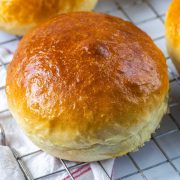
Soft and buttery, these bread machine brioche buns turn burger night into something special. The bread machine does the kneading, so your arms stay out of it. An overnight rest in the fridge does the rest, making the dough easy to shape. These are the brioche burger buns I built to hold a thick patty without falling apart.
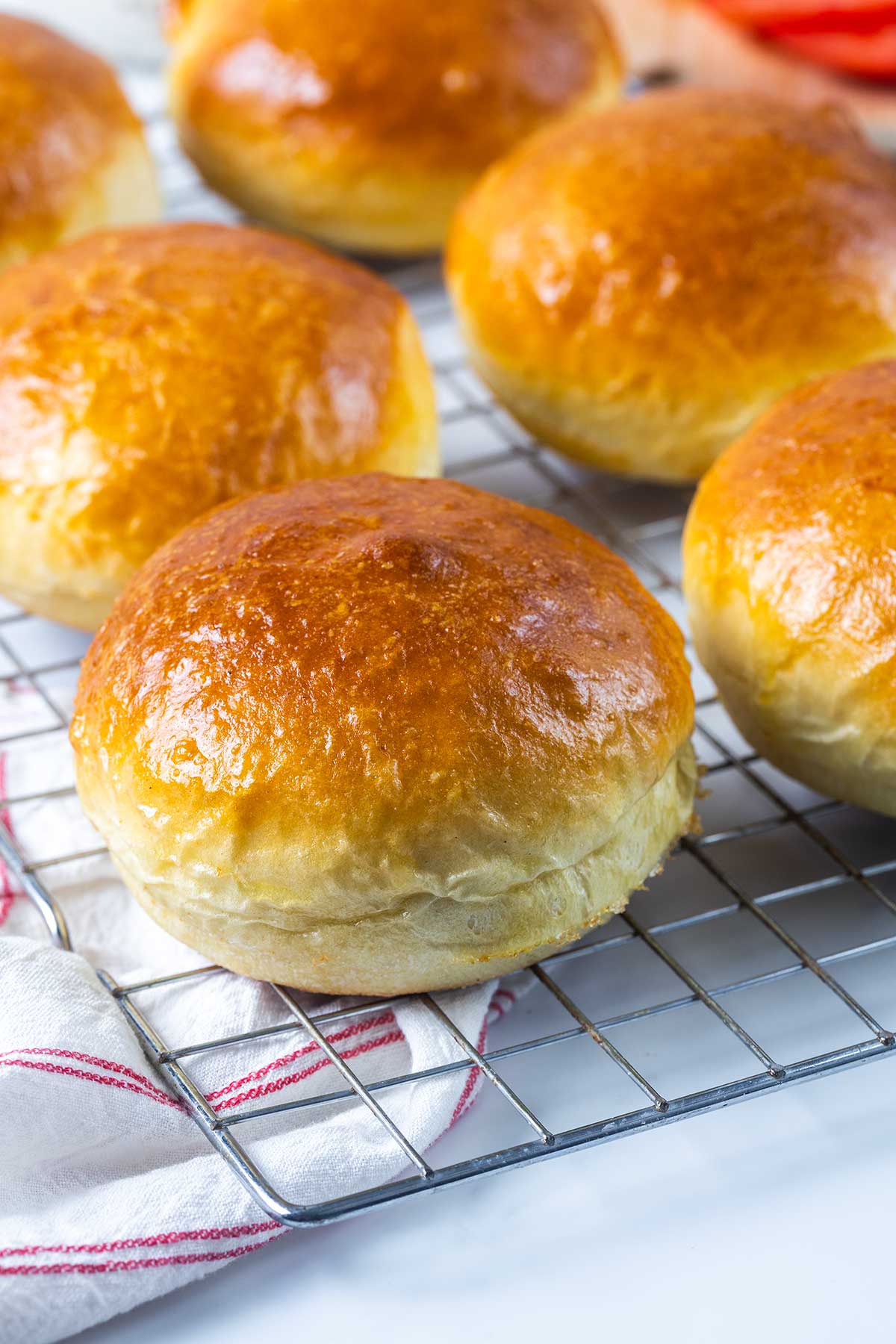
I am not going to pretend brioche is fast. It is not. It is enriched dough, which in this case means eggs, a half stick of butter and an overnight rest in the fridge.
What I will tell you is that the bread machine takes the hardest part off your plate. Brioche dough is sticky and needs a long, patient knead to build structure around all that fat. A stand mixer can do it. Your hands can do it, eventually. But the bread machine just does it, while you go do something else. That’s why I these are the easiest brioche buns I’ve made.
Looking for more bread recipes? Don't miss this Italian Herb and Cheese Bread and Bread Machine Hoagie Rolls.
Enriched Doughs and Your Bread Machine
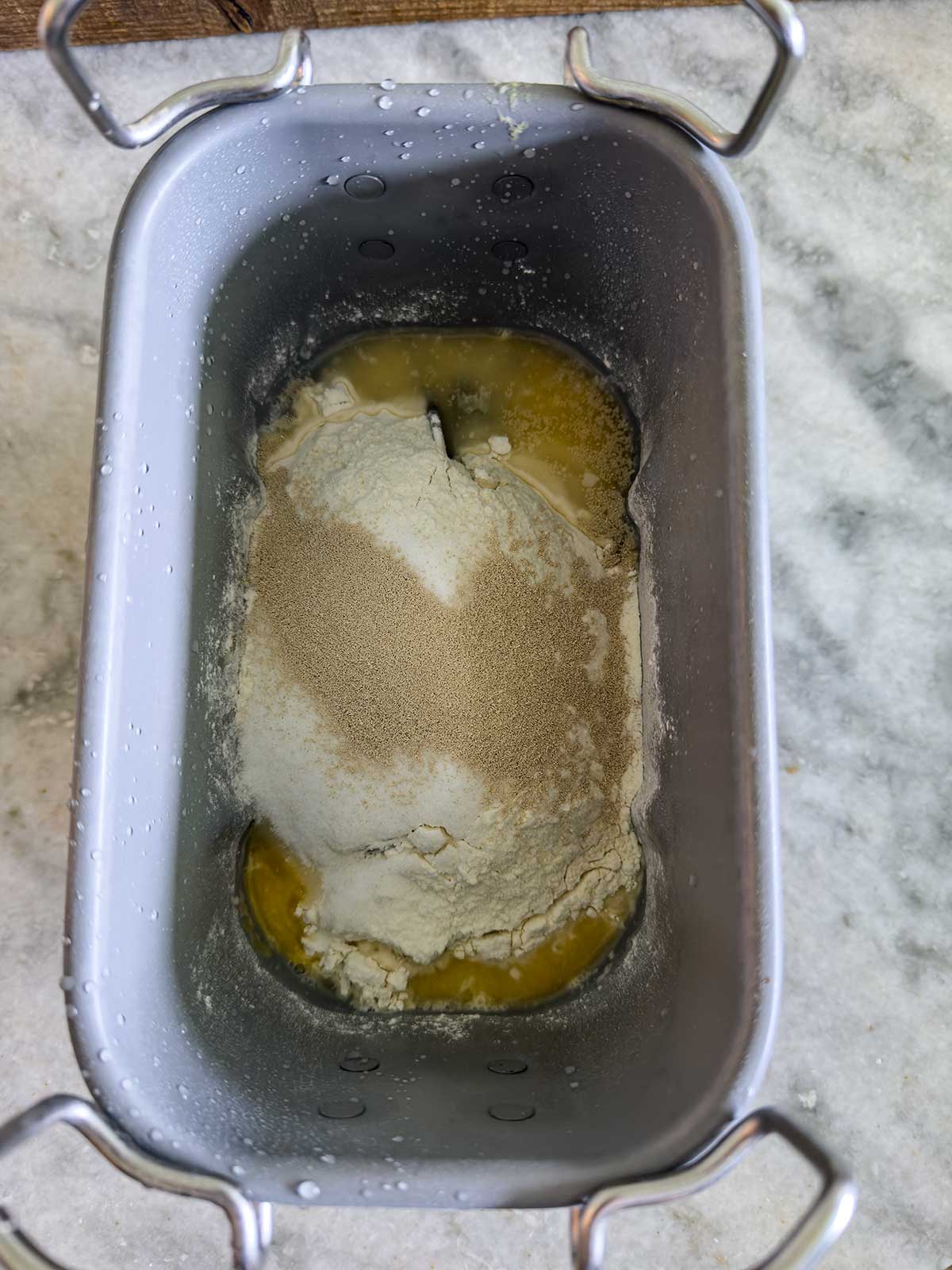
Making GOOD enriched doughs in your bread machine can require a bit more than dump and go. But I promise, it is easy. The water, eggs, salt, flour, sugar, and yeast go in first. You hit the dough cycle and when the add-in beep sounds, you add the butter cubes.
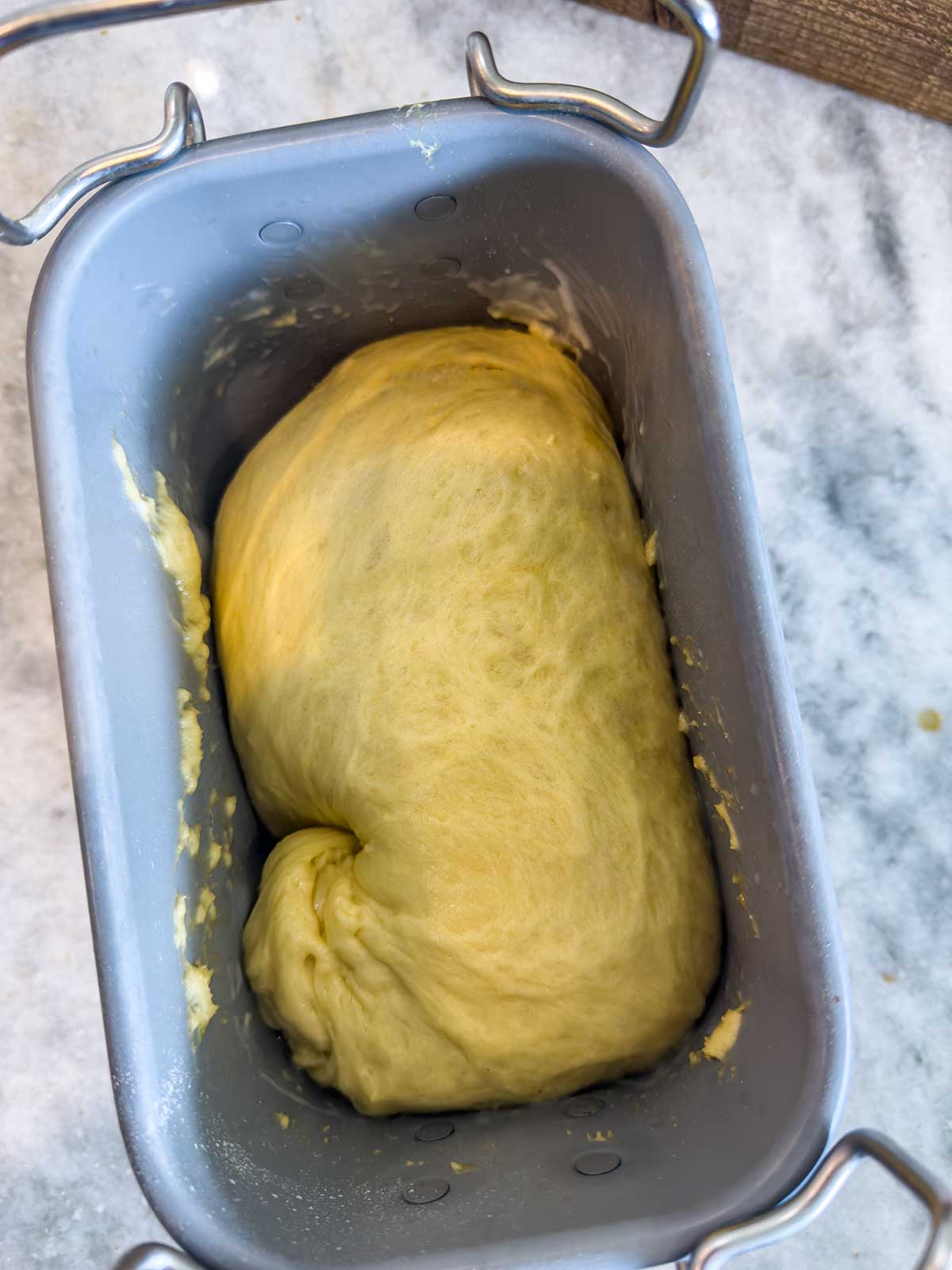
Make sure you check the dough about five minutes after you add the butter. It should look wet, and have a little tackiness. If the butter isn't incorporating, you can add flour, a tablespoon at a time until it pulls together. Don't add more than ¼ cup.
The dough firms up considerably overnight in the cold, and flour you add now could lead to dry brioche.
Weigh Your Flour, Please
Here is the one place I want to save you a headache. In one of my first four test batches, the dough came out wetter than it should have. I added a quarter cup of flour, it came right, and the buns were great. Then I could not reproduce the problem in two more tries.
The variable that changed? I had measured by cups in that batch, and for the rest I switched to a scale. A wet batch is almost always a measuring quirk, not a broken recipe. Three cups of bread flour is 360 grams.
Why the Overnight Chill?
The dough will be wet when if finishes, and needs to be refrigerated overnight beforeshaping.
The cold rest relaxes the gluten so the dough shapes without a fight. It also gives the yeast time to develop more flavor than a quick room-temp rise ever could.
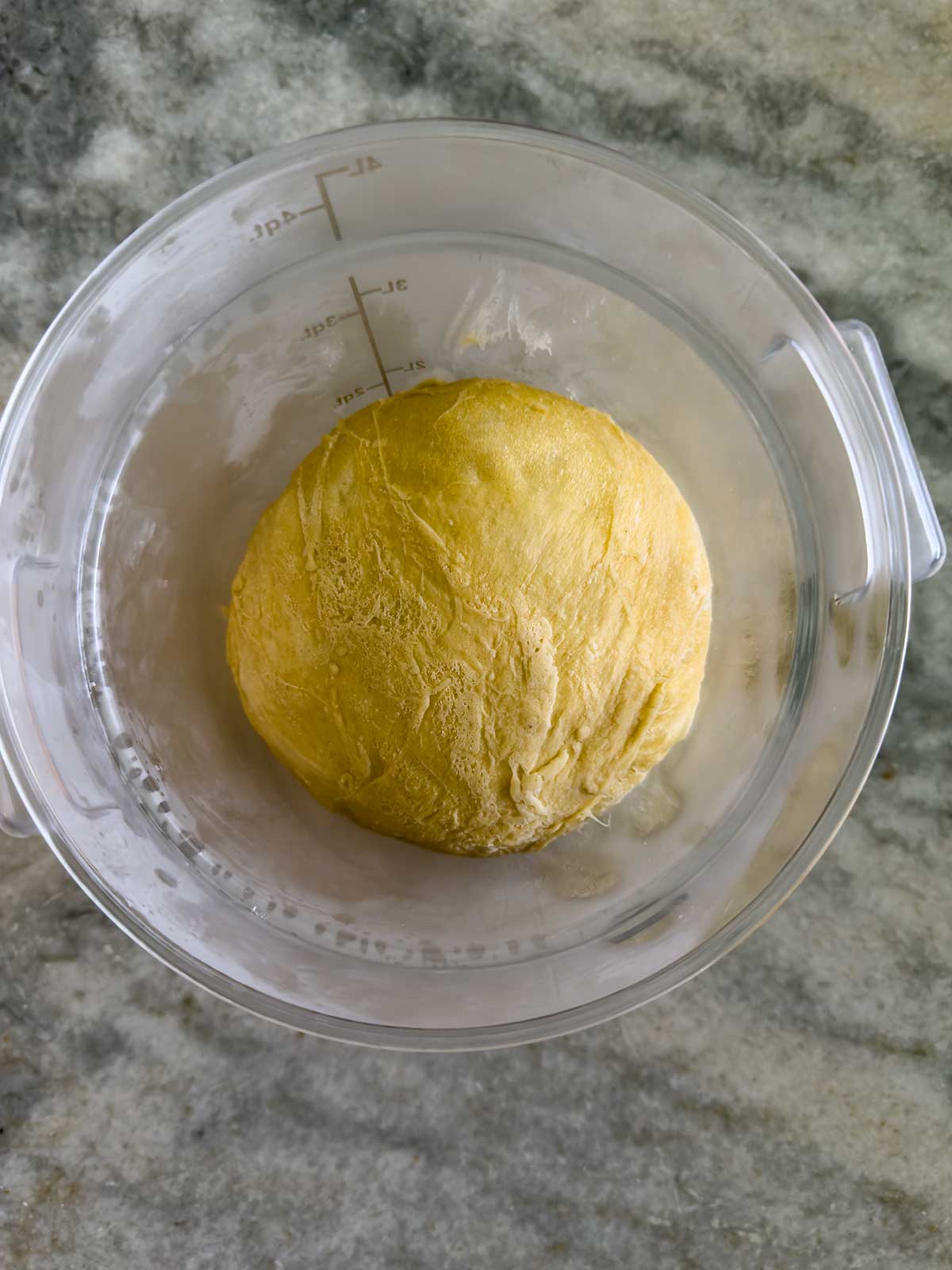
One warning from experience: this dough rises a lot in the fridge. Use a large enough container, or your dough will escape over the rim. I use bread buckets for this reason.
Also, know that I DID test skipping the overnight rise, and didn't like the results. The buns where crumbly and the texture was off.
When you are ready to bake, pull the dough out and let it sit at room temperature for an hour. This makes it easier to shape.
Shaping and the Second Rise
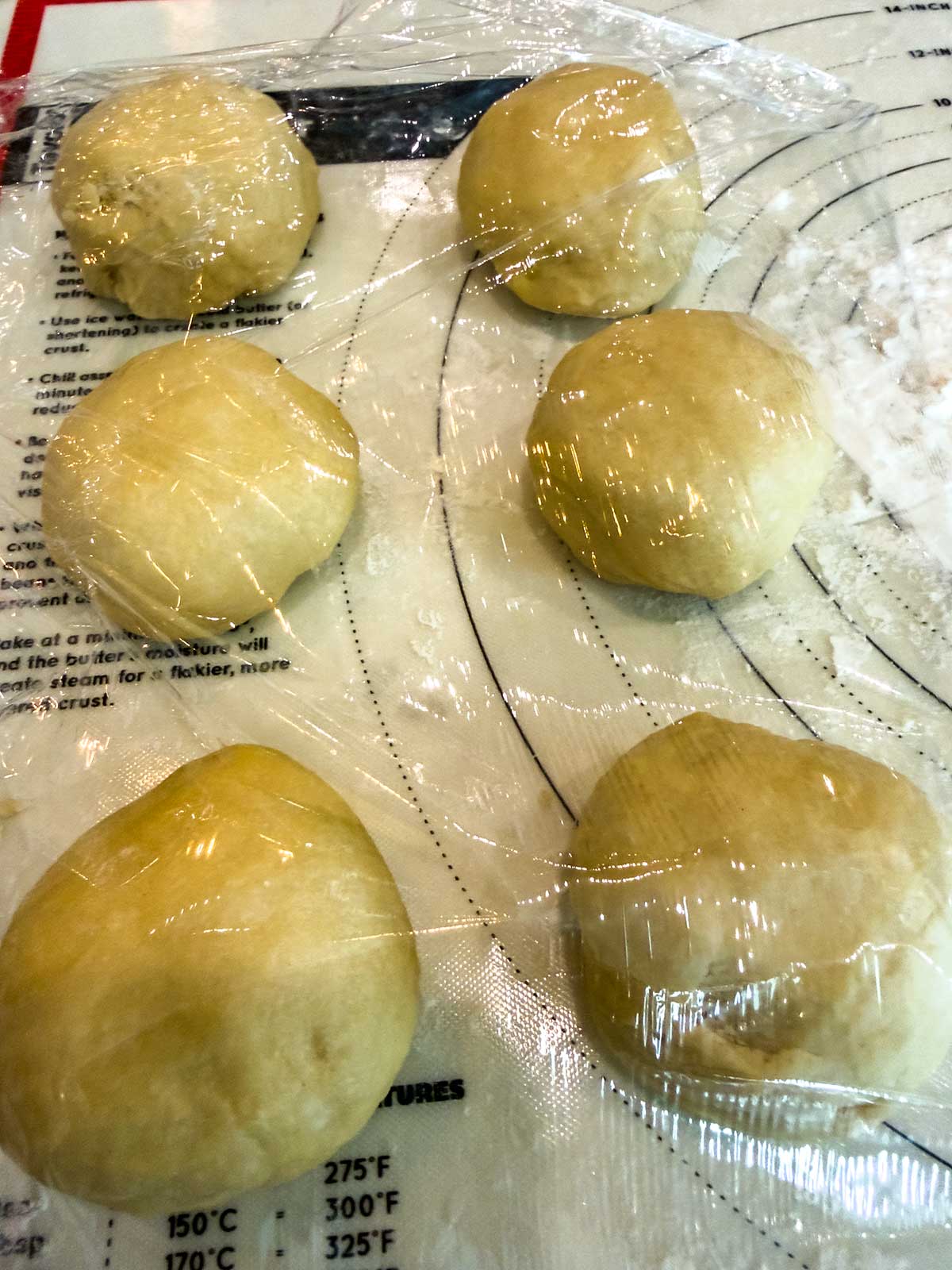
Divide the dough into six even pieces, about 115 grams each. For smaller rolls, go eight pieces at about 86 grams.
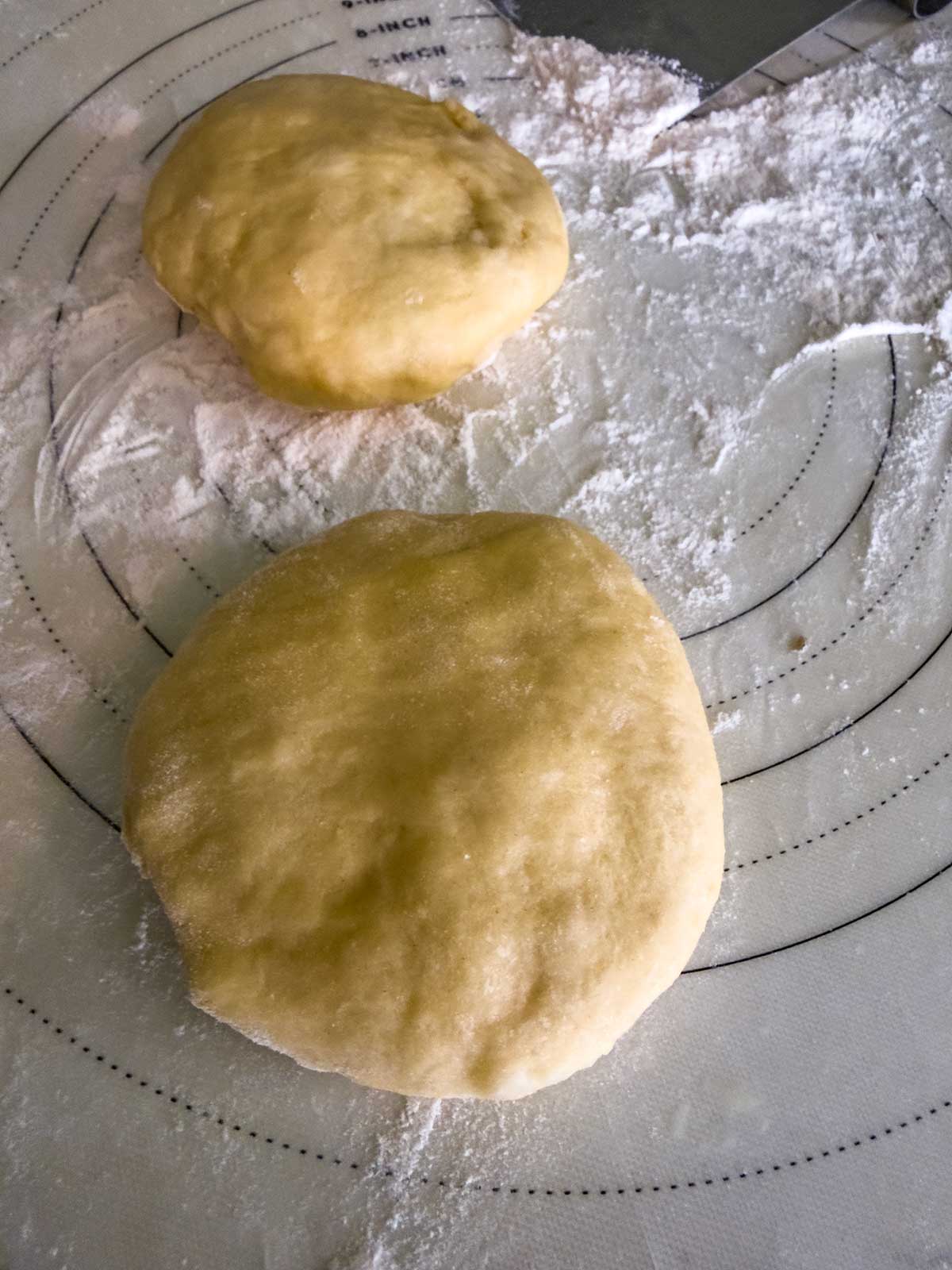
Roll each piece into a tight ball, then flatten it into a disk.
If the dough springs back and won't hold its shape, cover the pieces and let them rest 10 minutes. Relaxed dough shapes much easier.
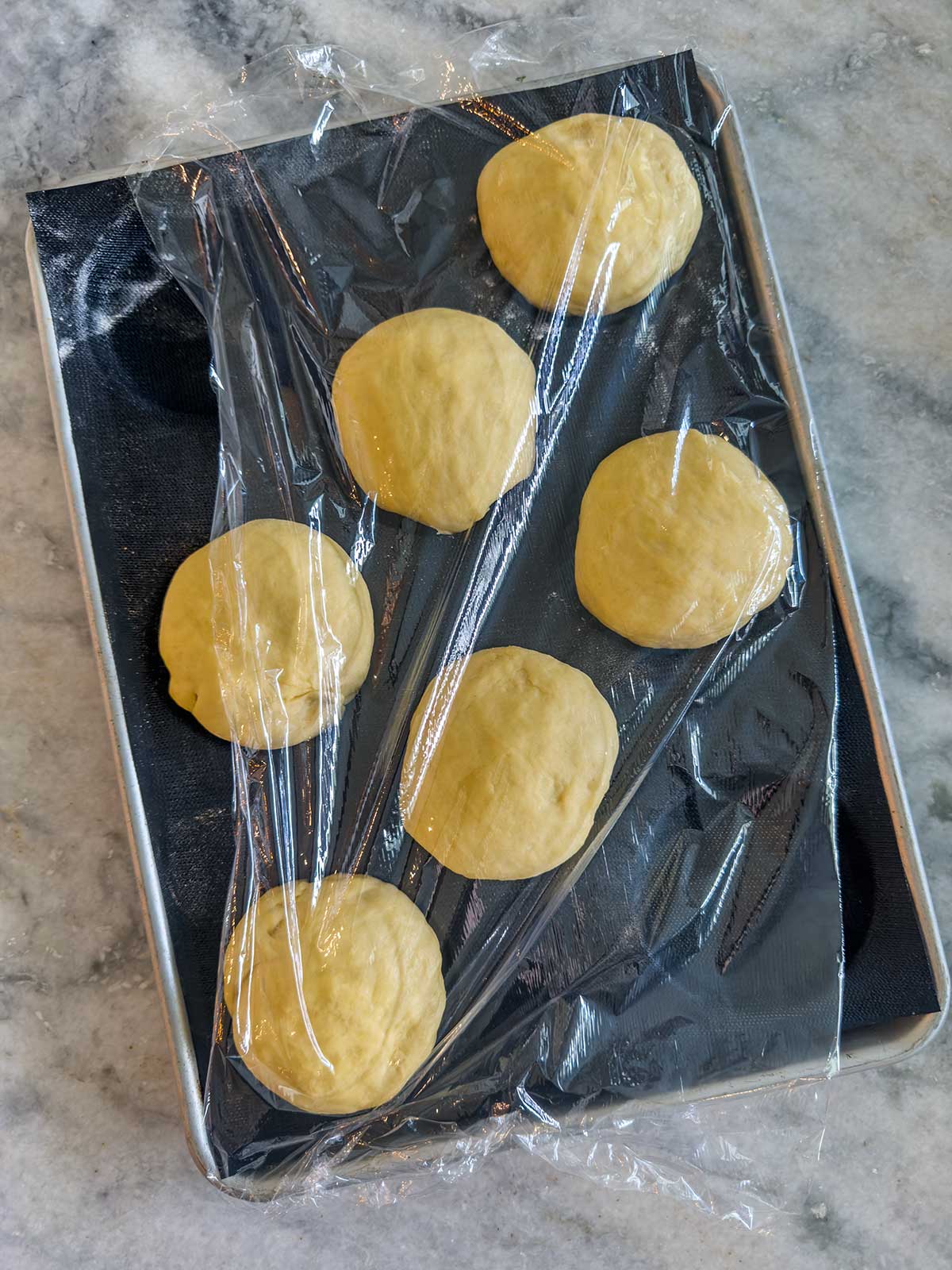
Arrange the shaped buns on a bun pan or a parchment-lined baking sheet.
Cover with plastic wrap and rise for one hour.
The Egg Wash and Baking
Make the egg wash at the end of the rising time and brush the tops evenly.
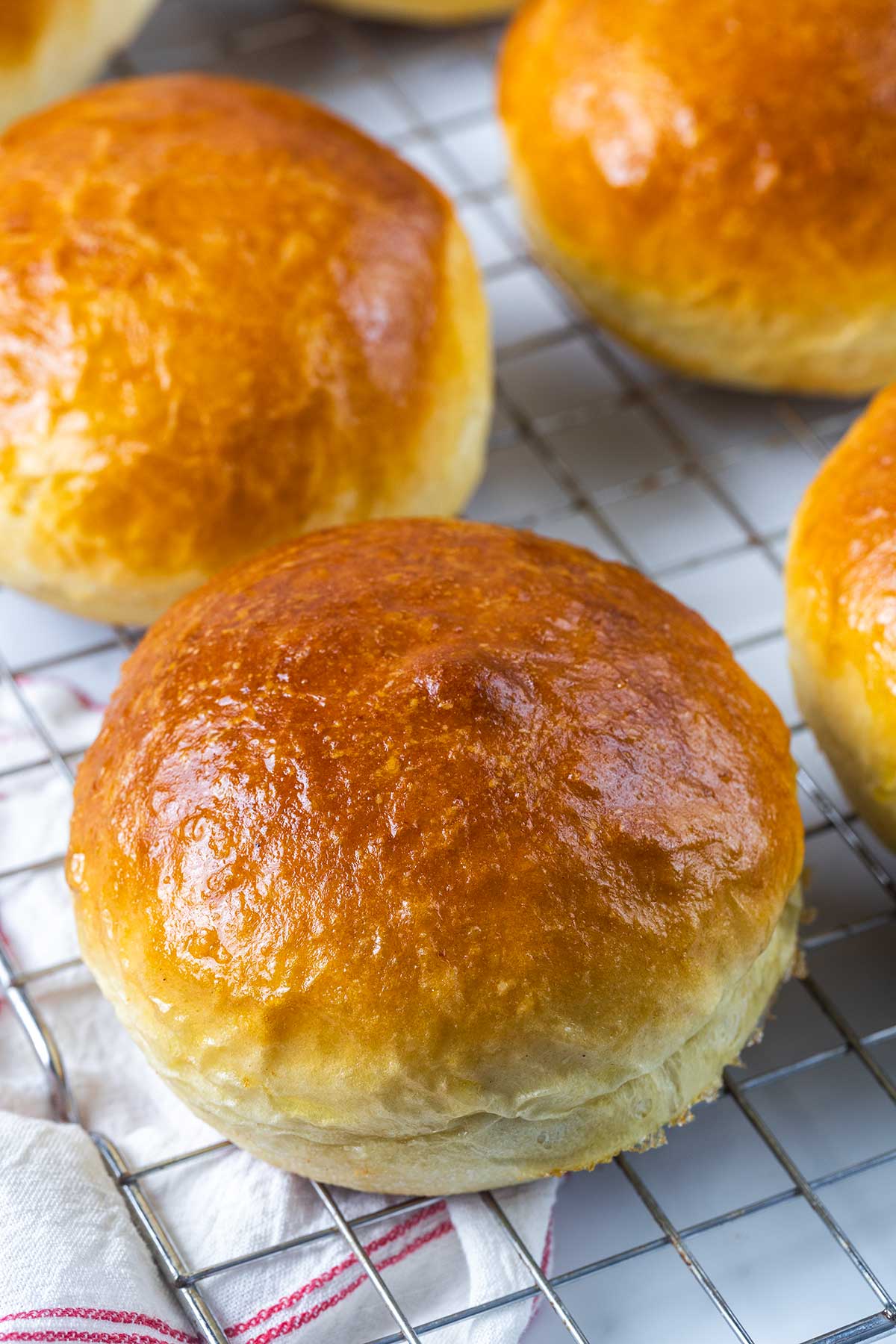
Bake at 350°F for 22 to 35 minutes, until they are golden brown.
Now Put a Burger on It
I will be honest about why these exist. I developed them to hold a proper burger, and to be pretty enough to shoot one on. They deliver on both. The crumb is tender but sturdy. There is enough structure to stand up to a thick patty and all its juices without dissolving into the bottom of your hands. (Which was a major problem with the first two versions of this I tested.)
For serving, toast the cut sides in a dry pan, under the broiler or on your griddle for a minute before building.
Burger night just got an upgrade it will be hard to walk back from.
Step-by-Step
Bread Machine Brioche Buns (Easy Brioche Buns)
Equipment
- Bread Machine
Ingredients
- 60 grams water ¼ cup
- 3 large eggs at room temperature
- 1 ¼ teaspoons salt
- 400 grams bread flour about 3 ⅓ cups
- 45 grams sugar 3 tablespoons
- 2 teaspoons bread machine yeast
- ½ cup unsalted butter at room temperature and cubed
Egg Wash
- 1 egg beaten
- Splash of water
- Pinch of salt
Instructions
- Place the water, eggs, salt, flour, sugar, and yeast, in your bread machine.
- Select the dough cycle, and hit start. Add the butter cubes when the add in cycle beeps. Check after about 5 minutes. A little wetness is normal, but if it is overly wet, add another ¼ cup of flour. (Resist the urge to add too much flour - the dough will become more solid overnight.)
- Continue to process according to the manufacturer’s instructions.
- When the cycle is complete, transfer to a large bowl with a lid and coat with oil. Refrigerated overnight, or up to 2 days.
- Pull the dough out of the refrigerator, and let sit at room temperature for 1 hour before shaping.
- Prepare your bun pan. If you don’t have one, you can make these on a parchment lined baking sheet.
- Divide the dough into 6 even pieces, about 120 - 125 grams each.adding flour as needed.
- Roll each piece into a tight ball and the flatten into a circle. If you are getting too much pull back on the dough, let it rest for 10 minutes and try again.
- Arrange on the baking sheet and cover with plastic wrap. Allow to rise for 1 hour.
- Preheat the oven to 350°F.
- Beat the egg with the salt and a splash of water. Brush the tops with the egg wash.
- Bake for 22 to 35 minutes, until golden brown.

Leave a Comment & Rate this Recipe