
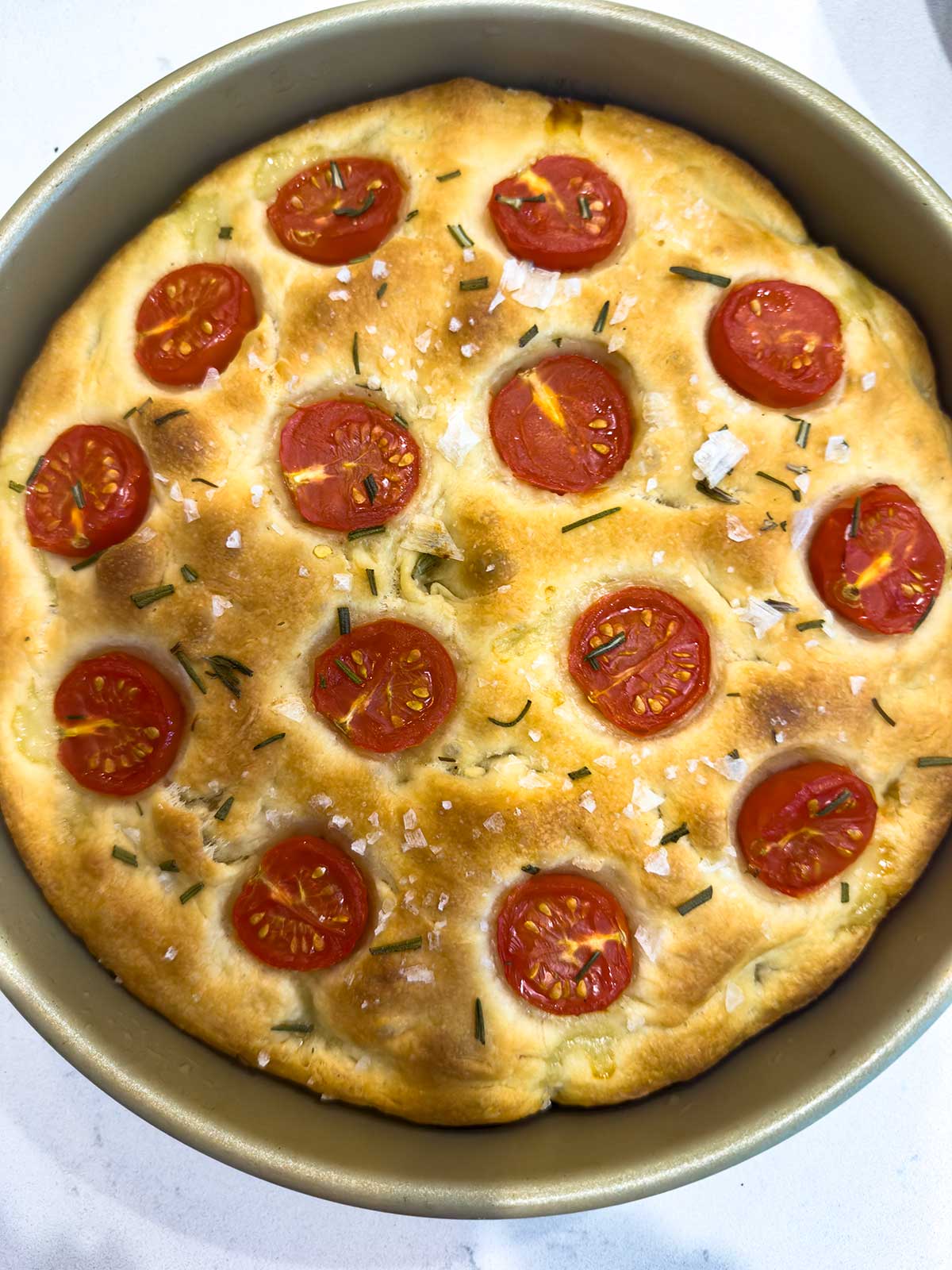
Every time I make this Tomato Focaccia Bread, I have a moment where I'm blown away by it. The cherry tomatoes collapse into sweet, almost melty bites in between the rosemary and flakey salt. The edges are golden-brown and crisp from the olive oil in the pan. And the inside? It has that perfect airy focaccia texture.
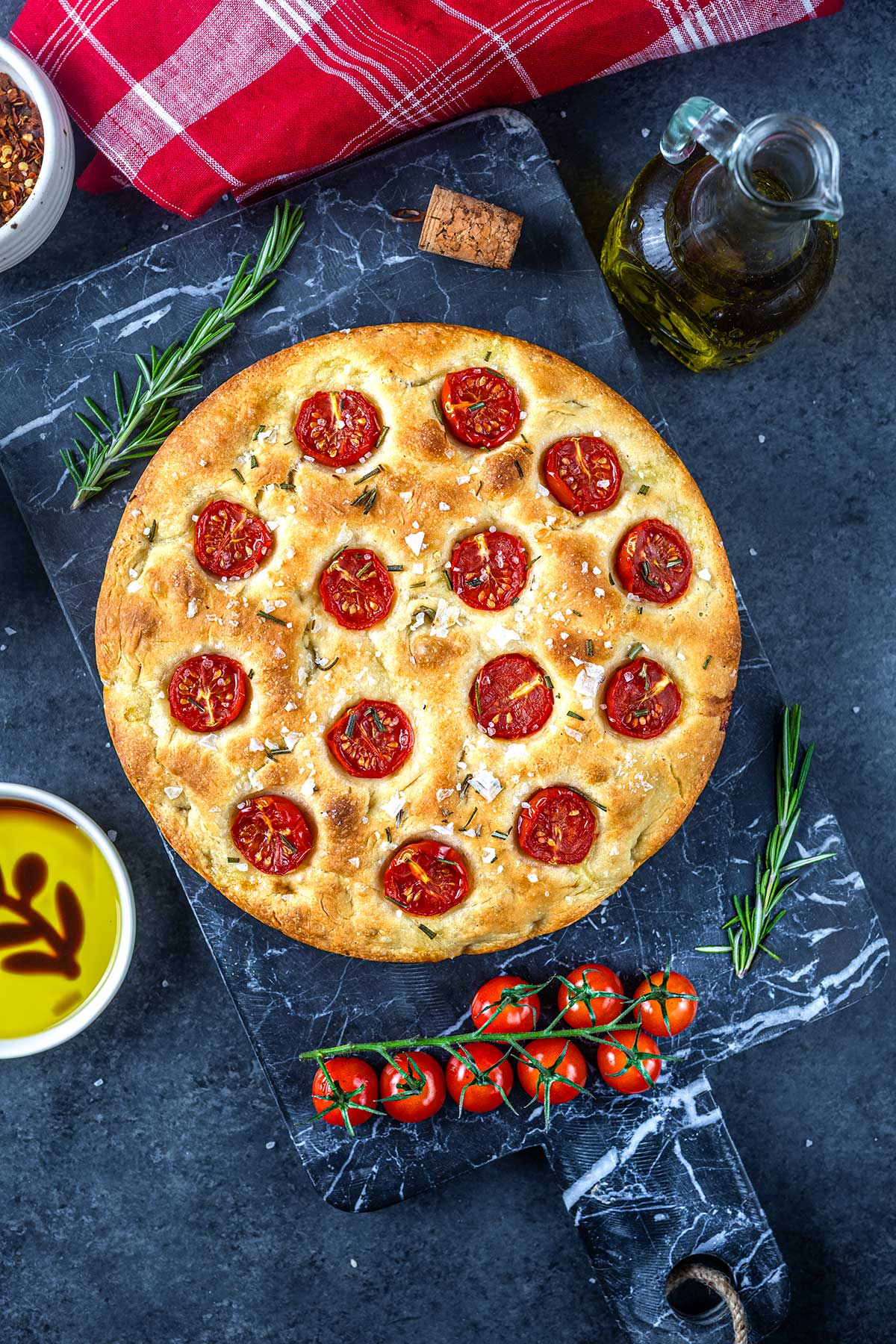
This tomato focaccia bread recipe is one that always impresses my friends and family.
The cherry tomatoes collapse into these jammy little pockets on top, and the olive oil gives the bottom crust a crisp almost-fried crunch. The inside stays chewy yet airy from the long cold rise.
If you’ve never made bread before, start here. And if you are looking for a quicker version, (like, tonight!) my Bread Machine Focaccia Bread is for you.
And if you are looking for another don't miss bread recipe, don't miss my Italian Herb and Cheese Bread.
Why My Recipe
- The cold rise is doing all the flavor work. You're trading effort for time, and the time is free.
- Salted-and-drained tomatoes cook into jammy bites instead of leaking water onto the bread.
- The generous addition of olive oil in the pan crisps the bottom into something closer to a deep-dish crust than a normal bread bottom.
- A 9-inch round serves six to eight comfortably.
Why You Can't Swap Flours in bread (and what to do if you need to)
Different flours have very different protein levels, and that protein effects that hydration and texture of your dough.
- All-purpose flour (10–11.5% protein): This recipe is built for all-purpose. My go-to is King Arthur Flour, and that is what all my bread recipes are tested with.
- Bread flour (12–14% protein): You can swap it in, but the focaccia will be denser. Hold back about 2 tablespoons of flour and expect to add a splash more water.
- Cake or pastry flour (6–9% protein): too soft. You'll get a flat, gummy disc. Don't.
- "00" flour: check the bag. Pizza-blend 00 is high-protein and works beautifully here. Pasta-blend 00 is low-protein and won't give you the structure you need.
Instant vs. Active Dry Yeast
This recipe is written for instant yeast (sometimes labeled "rapid-rise" or "bread machine yeast").
I like it because it doesn't have to be proofed, and as a busy single mom, any time I can save a step without sacrificing flavor, I'm in.
If all you have is active dry yeast, two adjustments:
- Use 25% more. That's about 1½ teaspoons of active dry yeast instead of 1¼ teaspoons of instant.
- Proof it first. Active dry yeast has a protective coating that needs to dissolve. Stir it into the lukewarm water (105°F–110°F) with the teaspoon of sugar from the recipe, and let it sit 5–10 minutes. When it looks foamy on top and smells faintly bready, it's alive. Add it to the flour with the oil and carry on.
If you happen to have fresh yeast (a brick or cake of compressed yeast), use about 3½ times the weight of instant (roughly ½ ounce / 14 g here). Crumble it into the lukewarm water with sugar to dissolve before mixing in.
The Tomato Trick That Fixes the Soggy Top
The number-one complaint about tomato focaccia anywhere on the internet is the soggy top. The fix takes ten minutes.
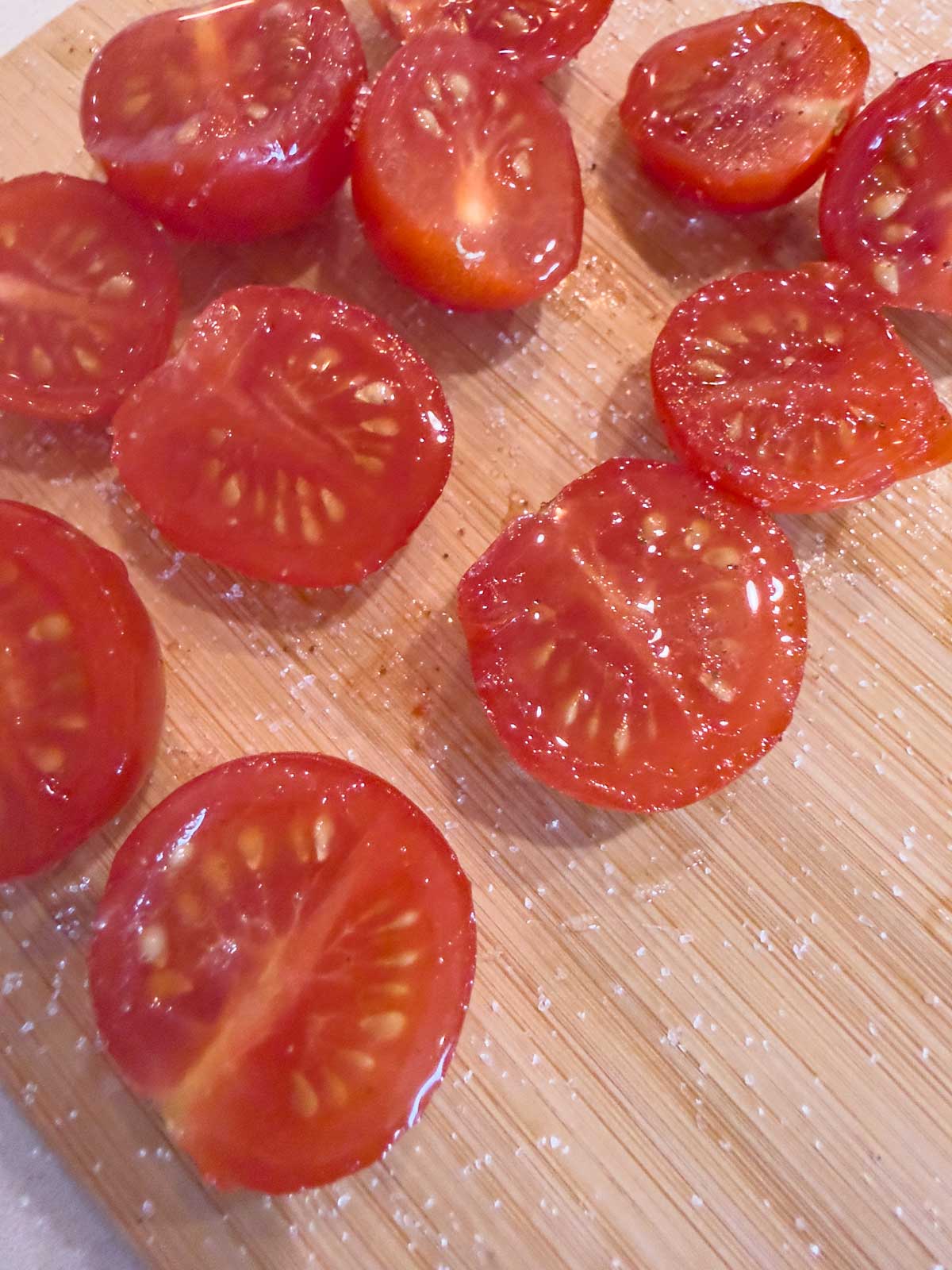
Cherry tomatoes and grape tomatoes are full of water. If you put them on raw, that water has nowhere to go but down into your dough. Salt them first and let them sit cut-side up for ten minutes on a paper towel — the salt pulls the liquid out. What ends up on top of the focaccia is concentrated tomato: sweeter, more jammy, more flavor. What's underneath it stays crisp.
I also like to put the tomatoes on my dough with the cut side up, which further prevents the soggy top.
A few things I've learned
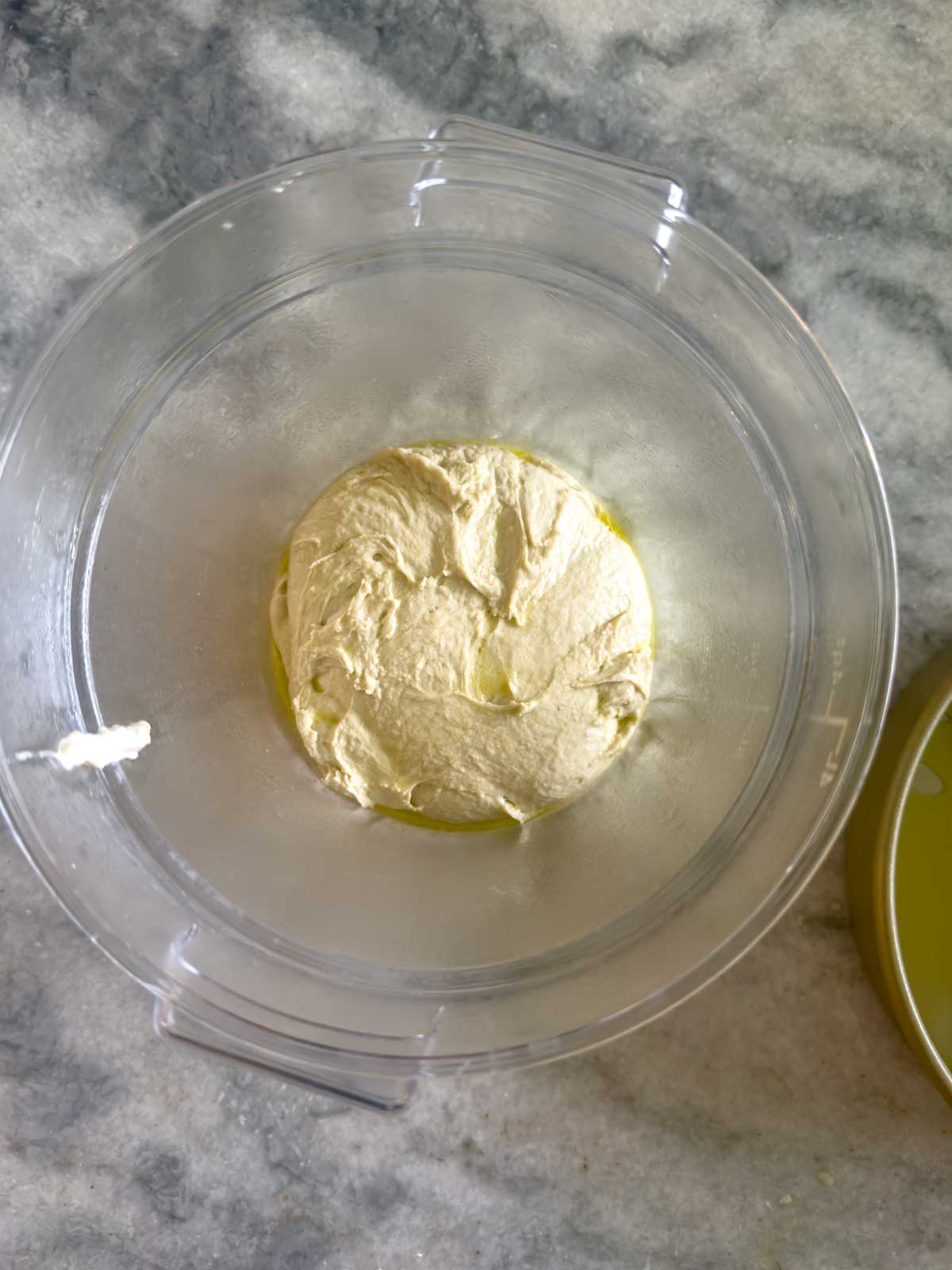
- Don't shortcut the cold rise. The overnight in the fridge is doing the flavor work. You can stretch it to 48 hours. You cannot compress it to 2.
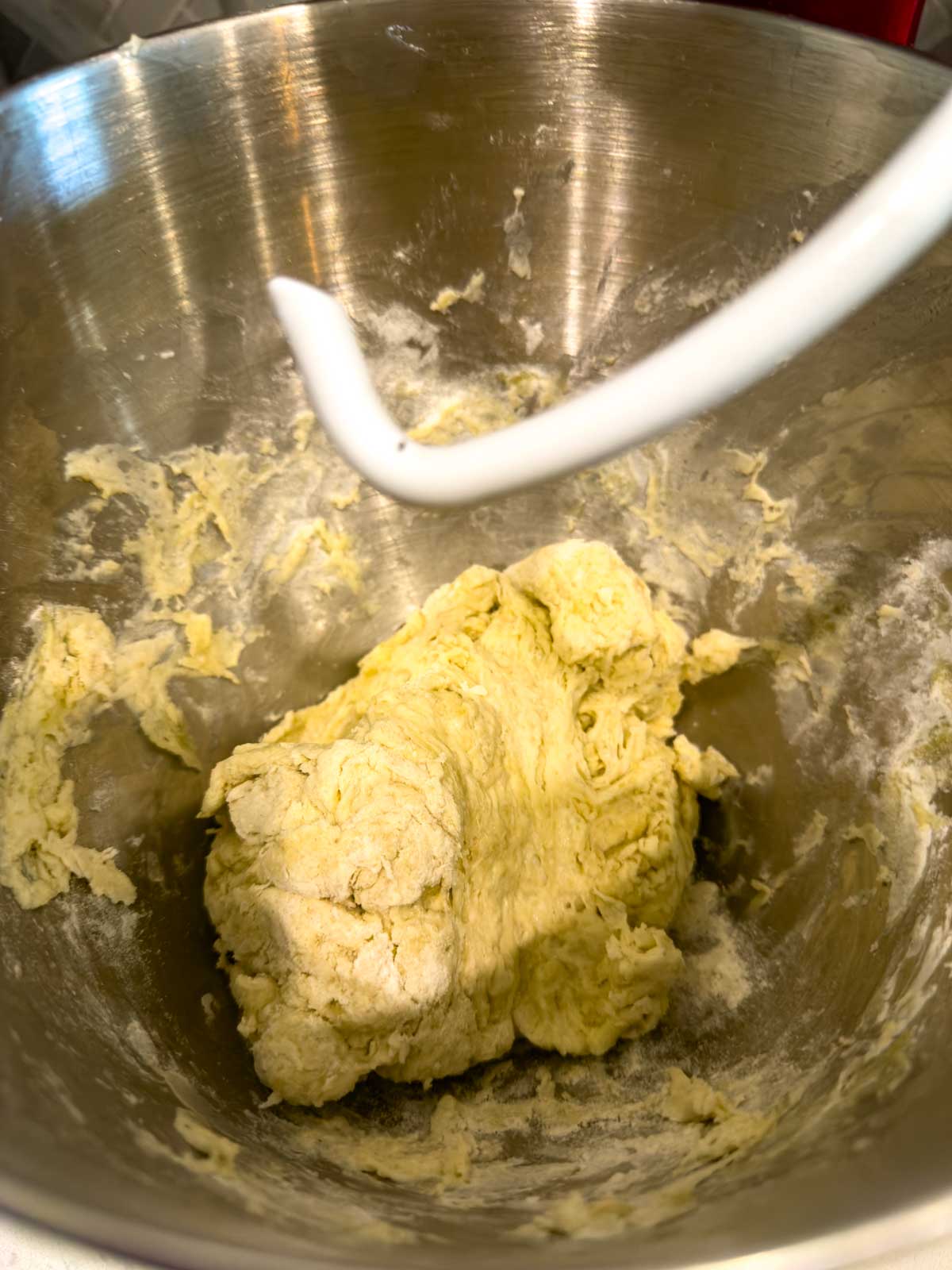
- The dough is supposed to feel tacky. Stickier than other breads you've worked with, probably. Don't add more flour — that's where dense focaccia comes from.
- Use enough olive oil. People always think they're using too much. They almost never are. The pan should be slick, not greased.
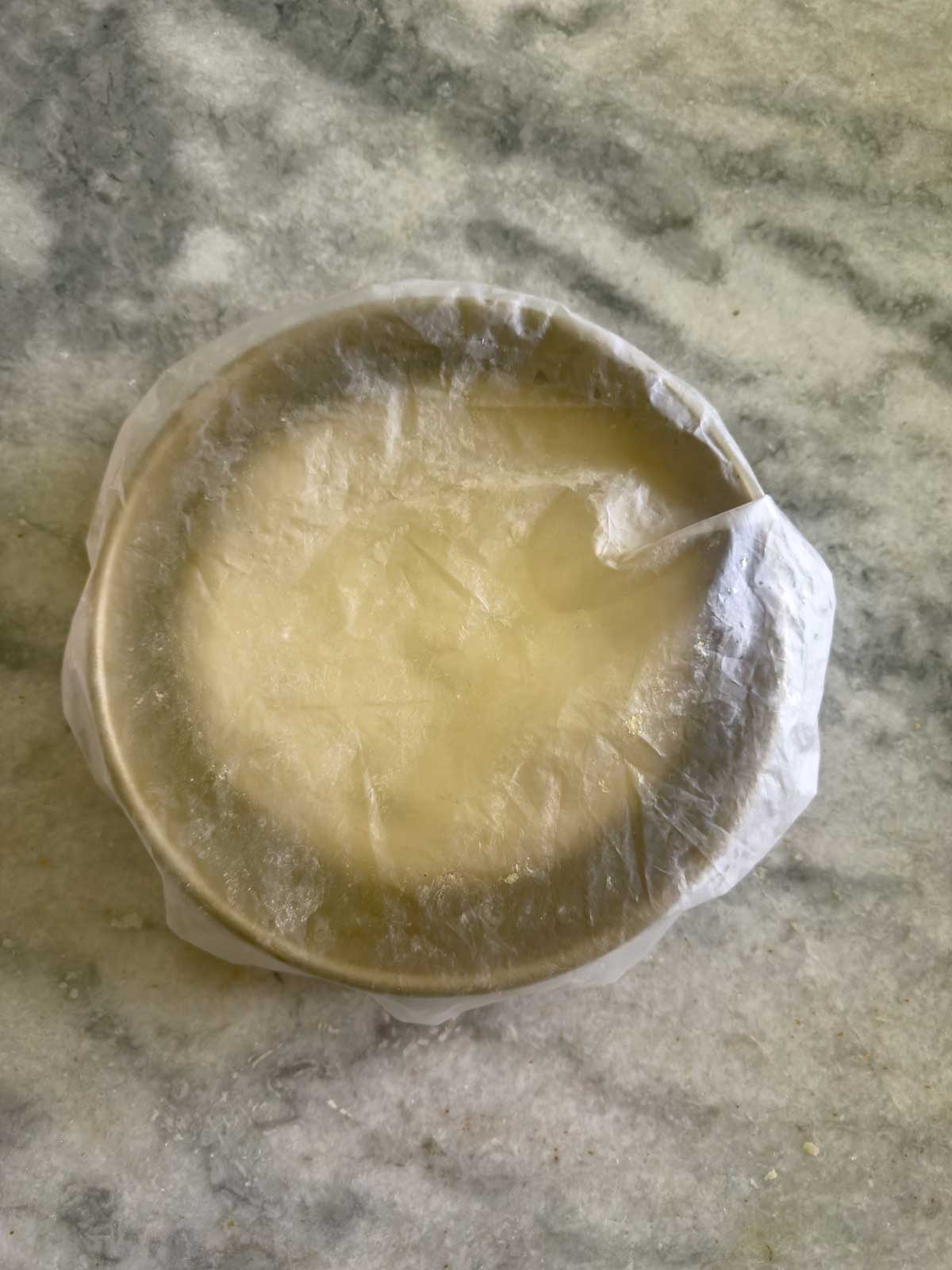
- Spray your plastic wrap. During the final rise, make sure you spray your plastic wrap or bread cover or it could stick and deflate your dough.
- 450°F is the right temperature. Lower gives you a pale crust and a soggy crumb. Higher will scorch the tomatoes before the inside is done.
- Press the dimples all the way down. Halfway gets you halfway focaccia.
- You can't really overproof this in the fridge. Forgot about it for an extra day? Probably even better.
- If active dry yeast doesn't foam after 10 minutes, the yeast is dead. Start over. It's not the recipe.
How it Comes Together
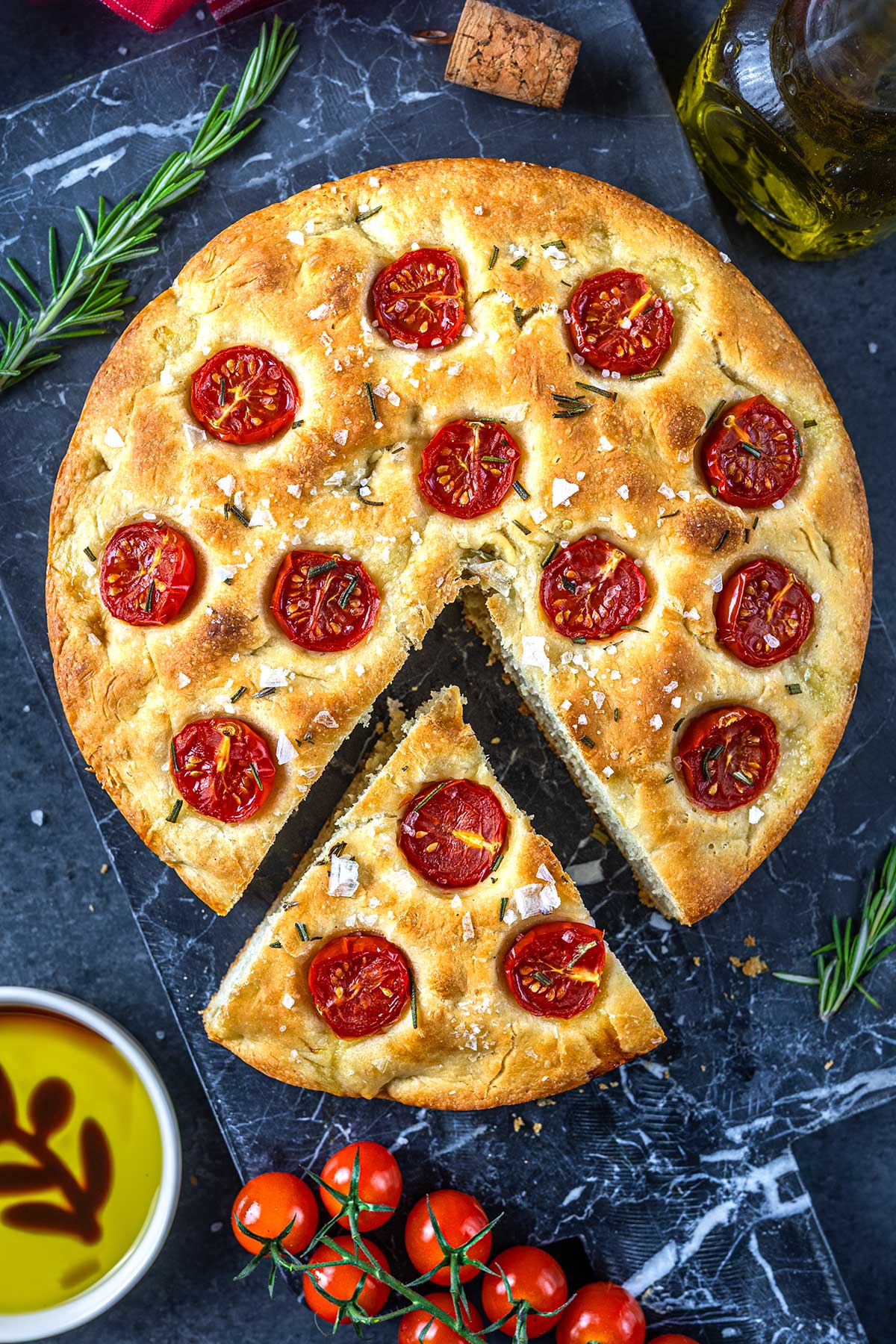
Overnight Cherry Tomato Focaccia Bread
Ingredients
For Topping
- 1 cup cherry tomatoes halved
- 1/ teaspoon sea salt
- 2 tablespoons fresh rosemary chopped (thyme or oregano could also be used.)
- ½ teaspoon flaky salt
Instructions
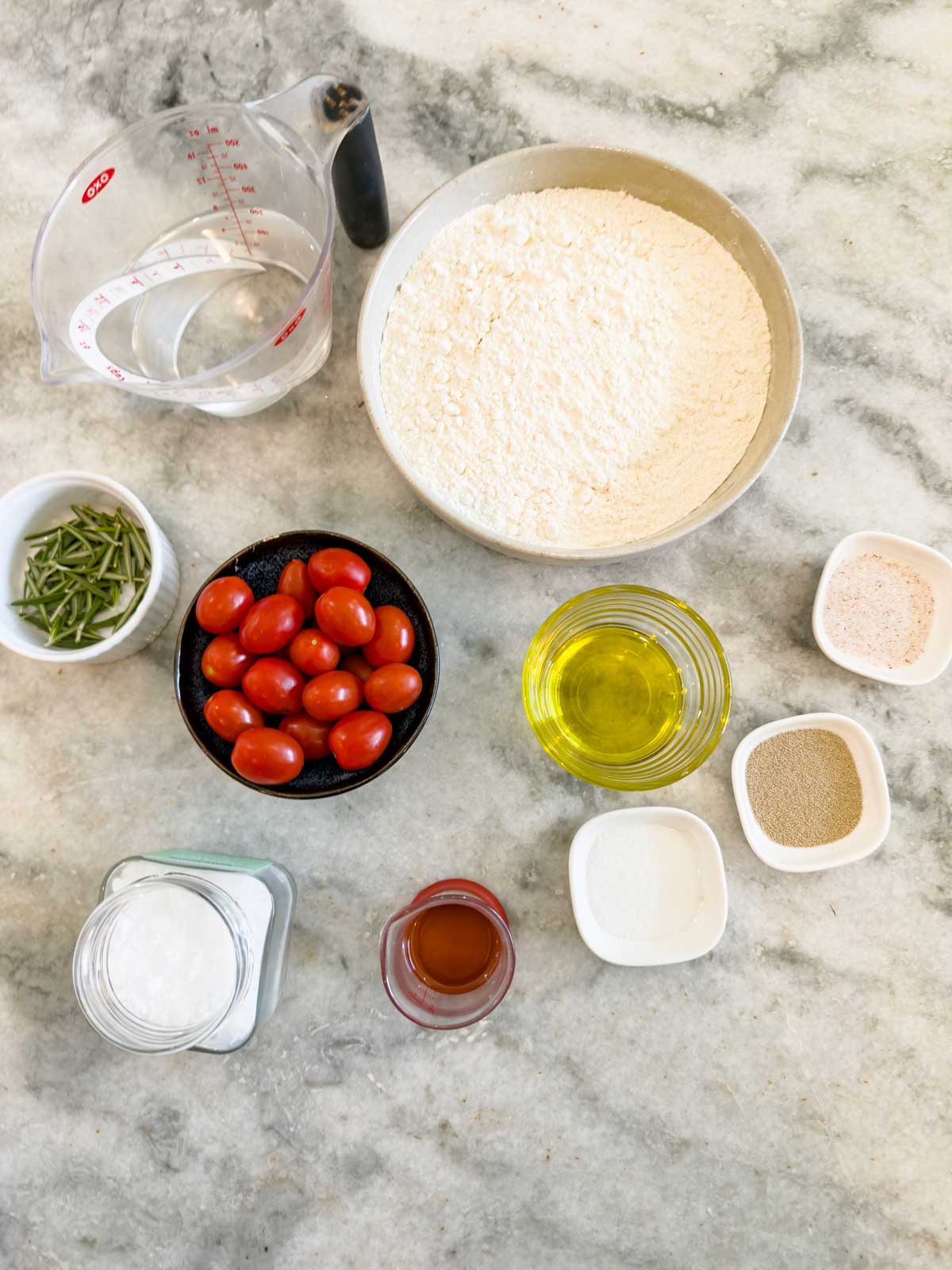
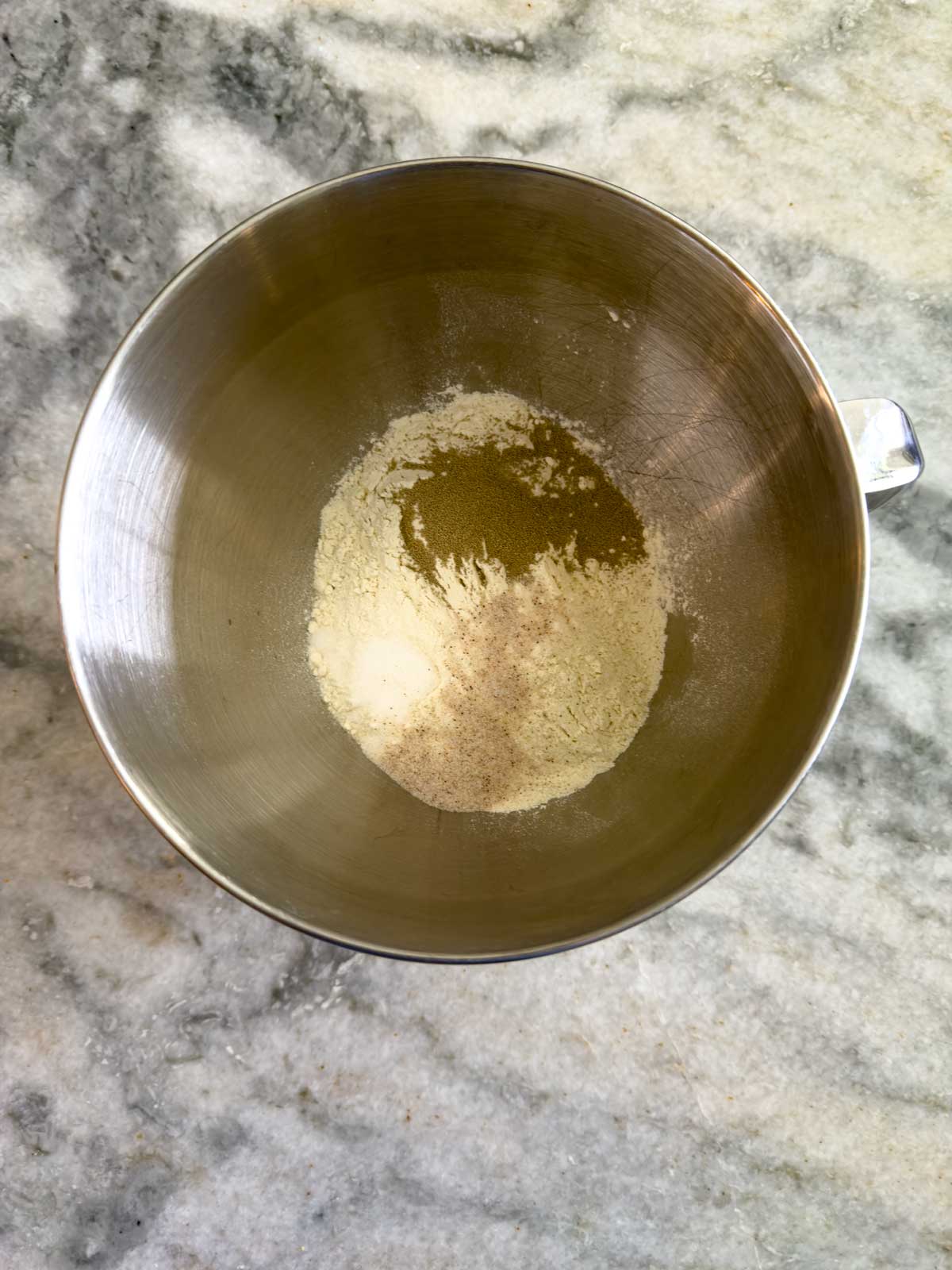
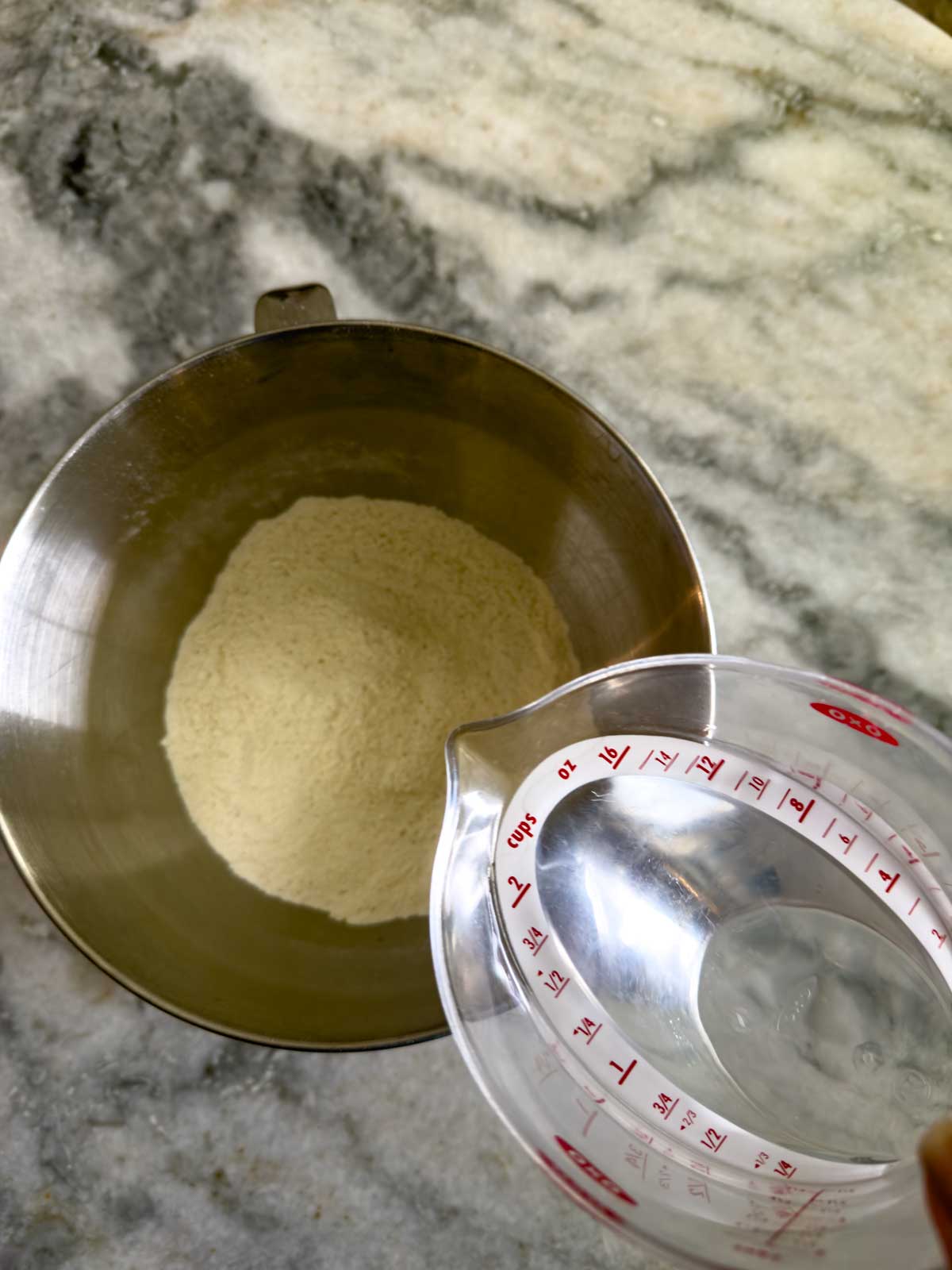
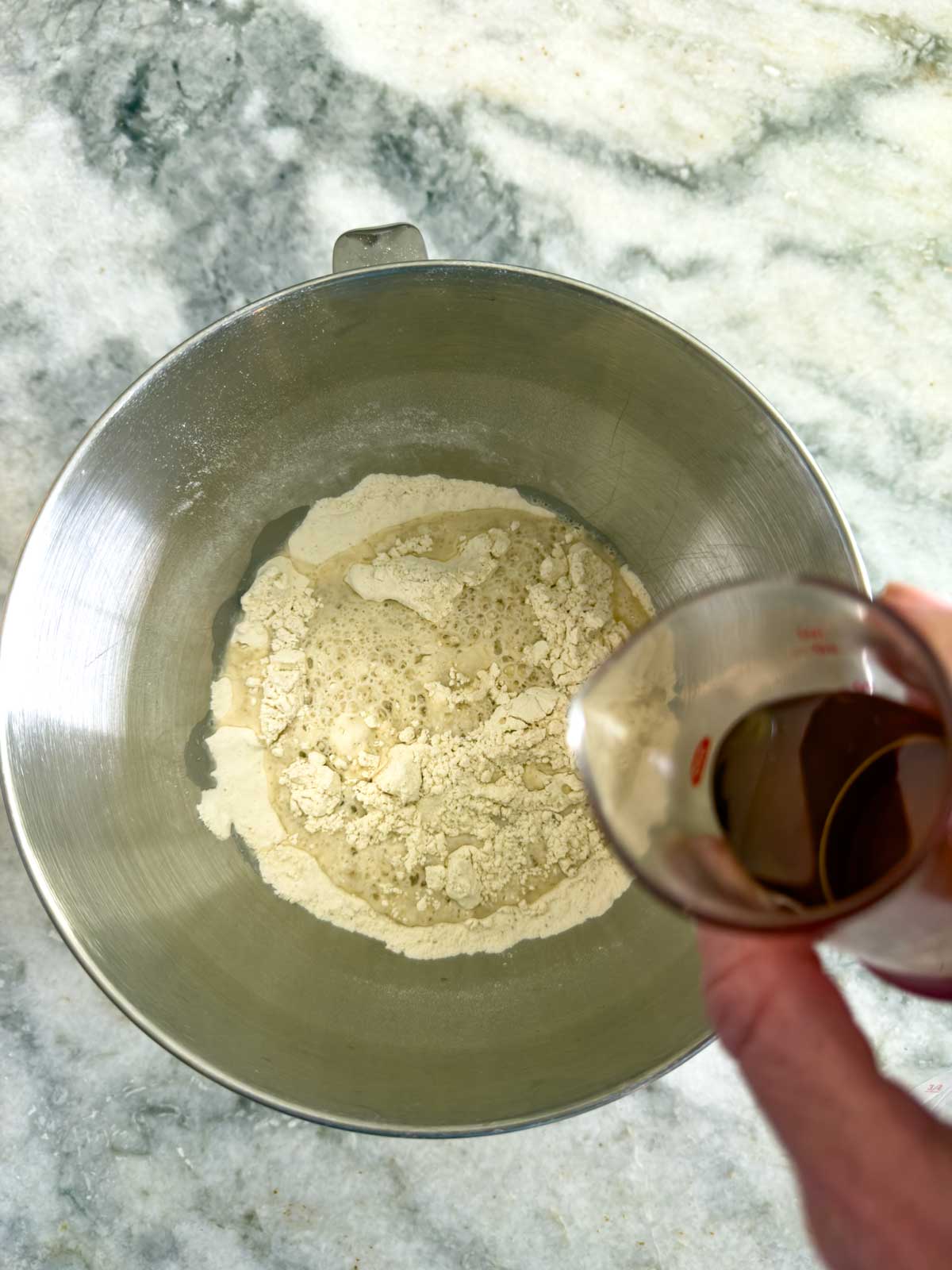
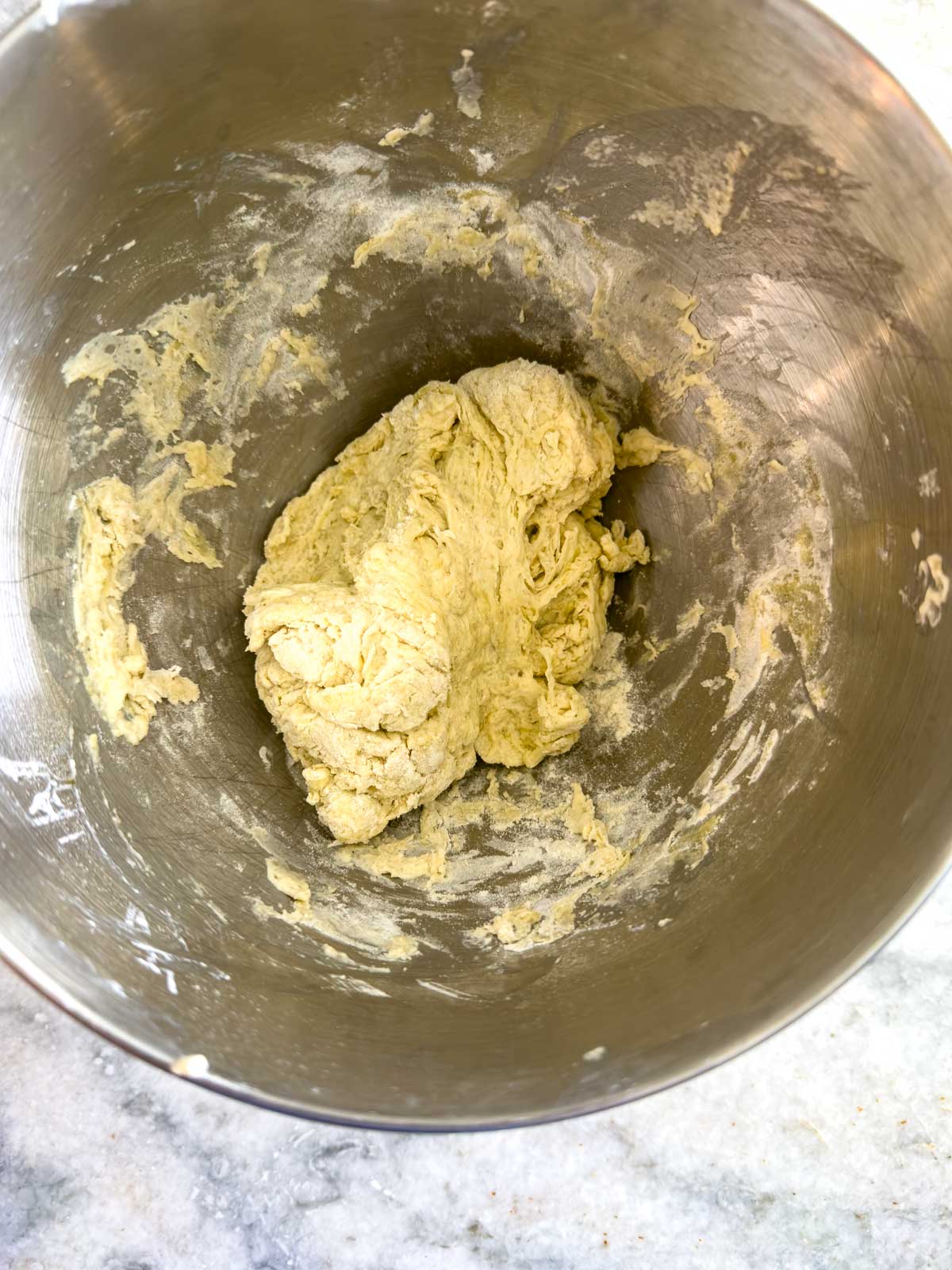
- In the bowl of a stand mixer, stir together the flour, yeast, salt and sugar. Add the water and olive oil, and stir until combined.
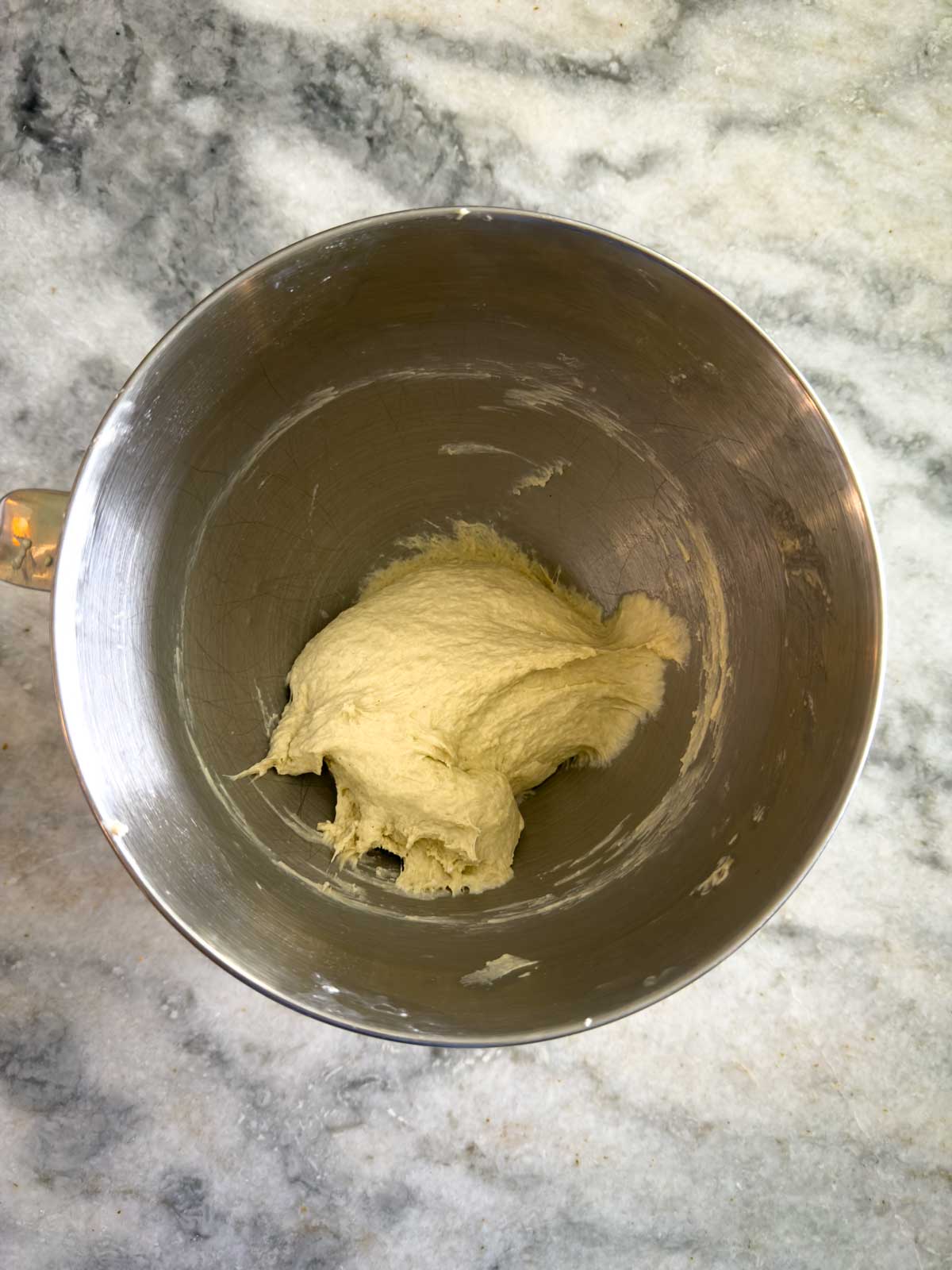
- Using the dough hook, knead the dough for 5 minutes, or until the dough is smooth.
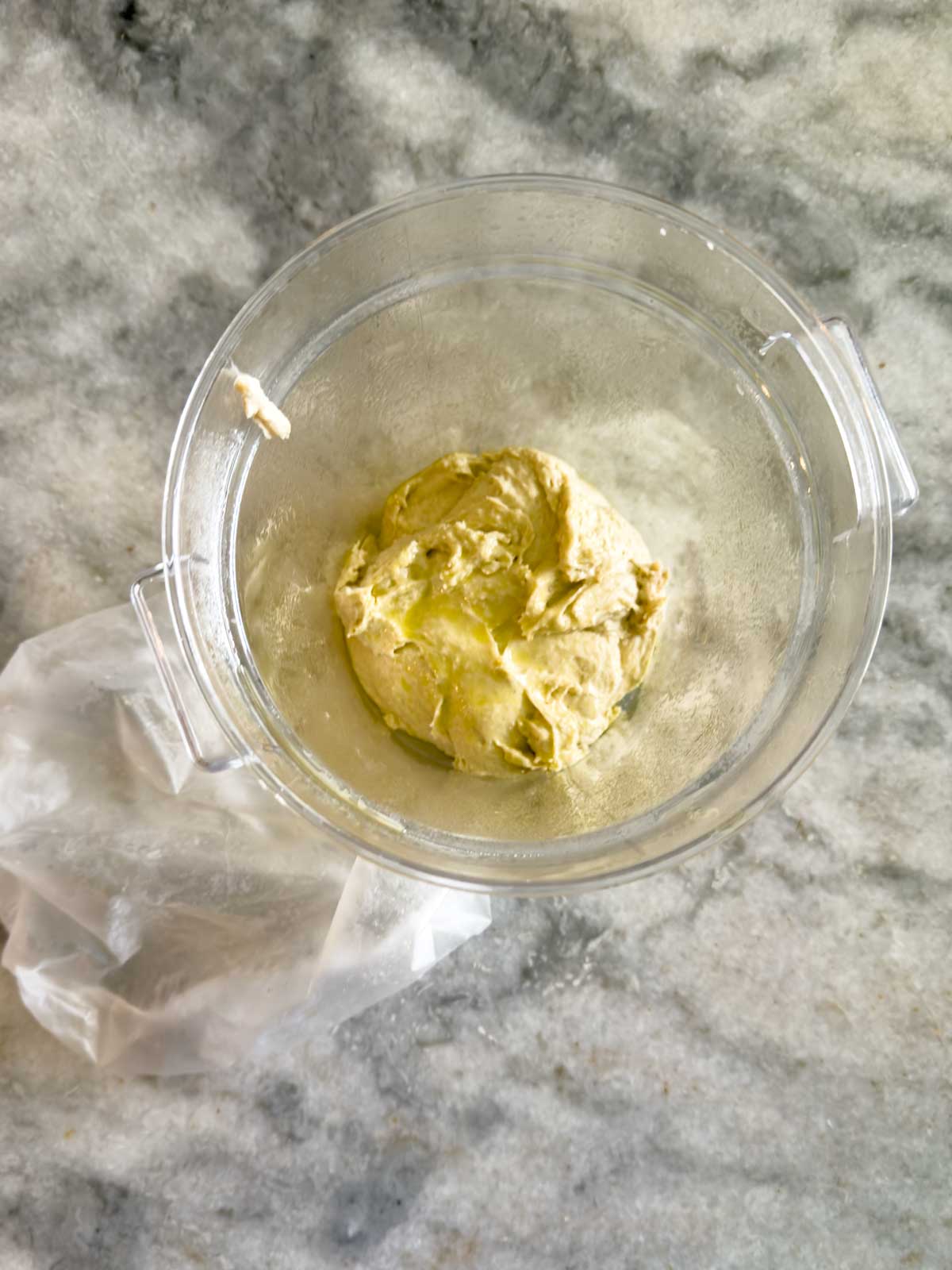
- Transfer the dough to a large container with a lid. Coat well with oil and refrigerate overnight. (Or up to 2 days)
- Place the olive oil in a 9” round cake pan and brush to coat the sides.
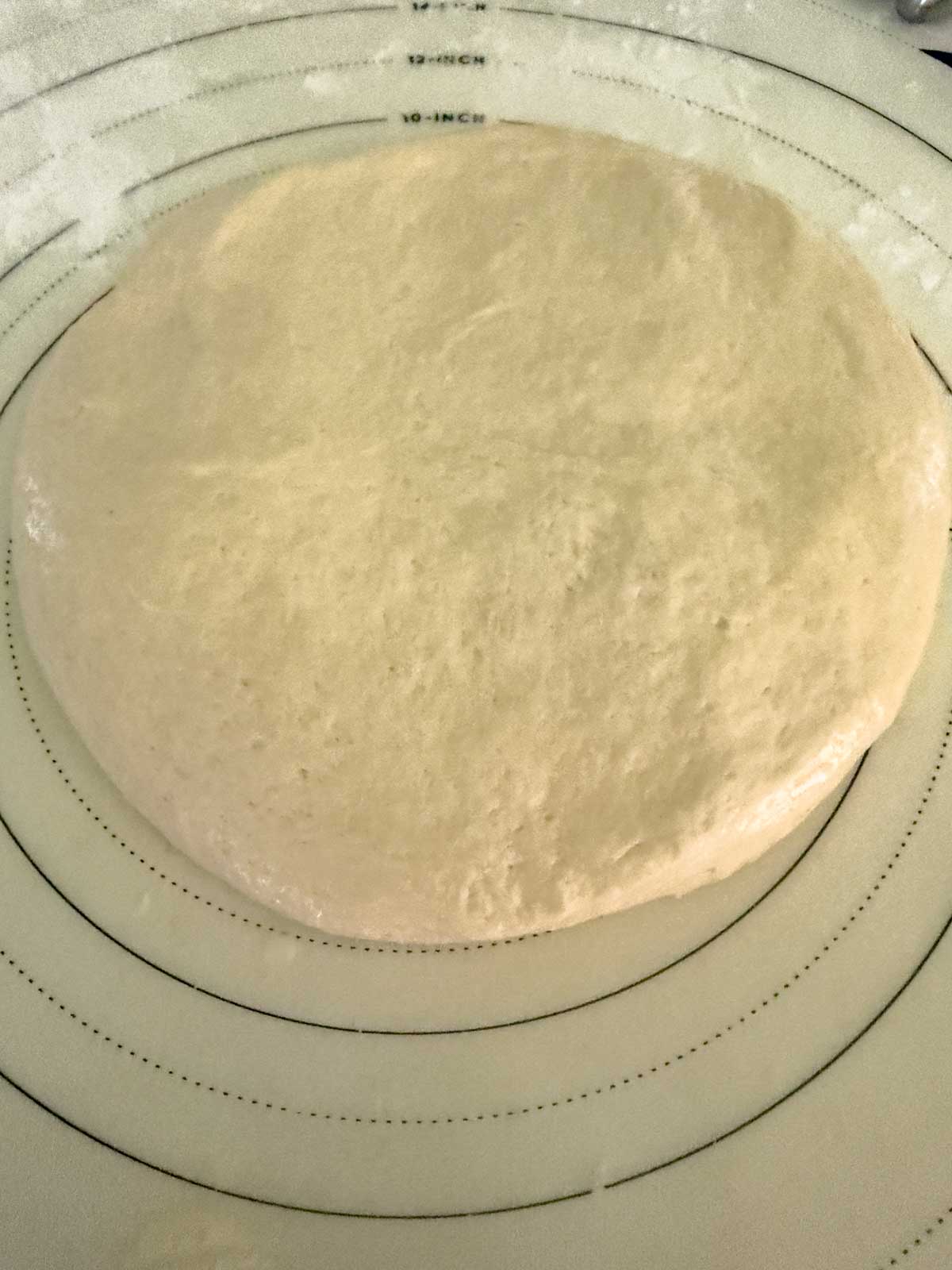
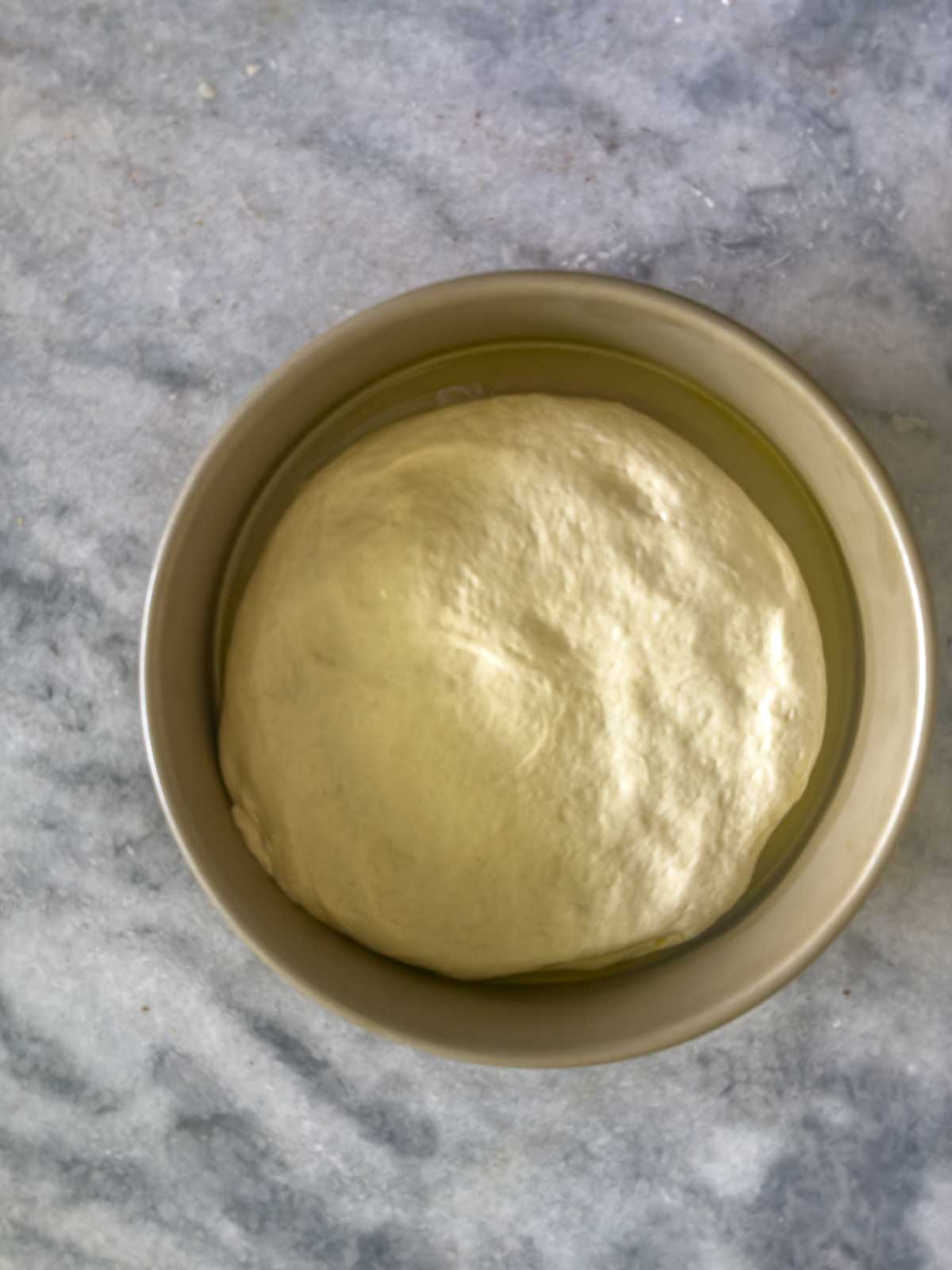
- Transfer the dough to a clean surface and roll into a ball. Transfer to the prepare pan and coat with the oil. Press down gently.
- Cover, and let sit at room temperature for 2 to 4 hours. Sprinkle the halved cherry tomatoes with salt. Let sit, cut side up for 10 minutes. Turn over on a paper towel.
- Preheat the oven to 450°F.
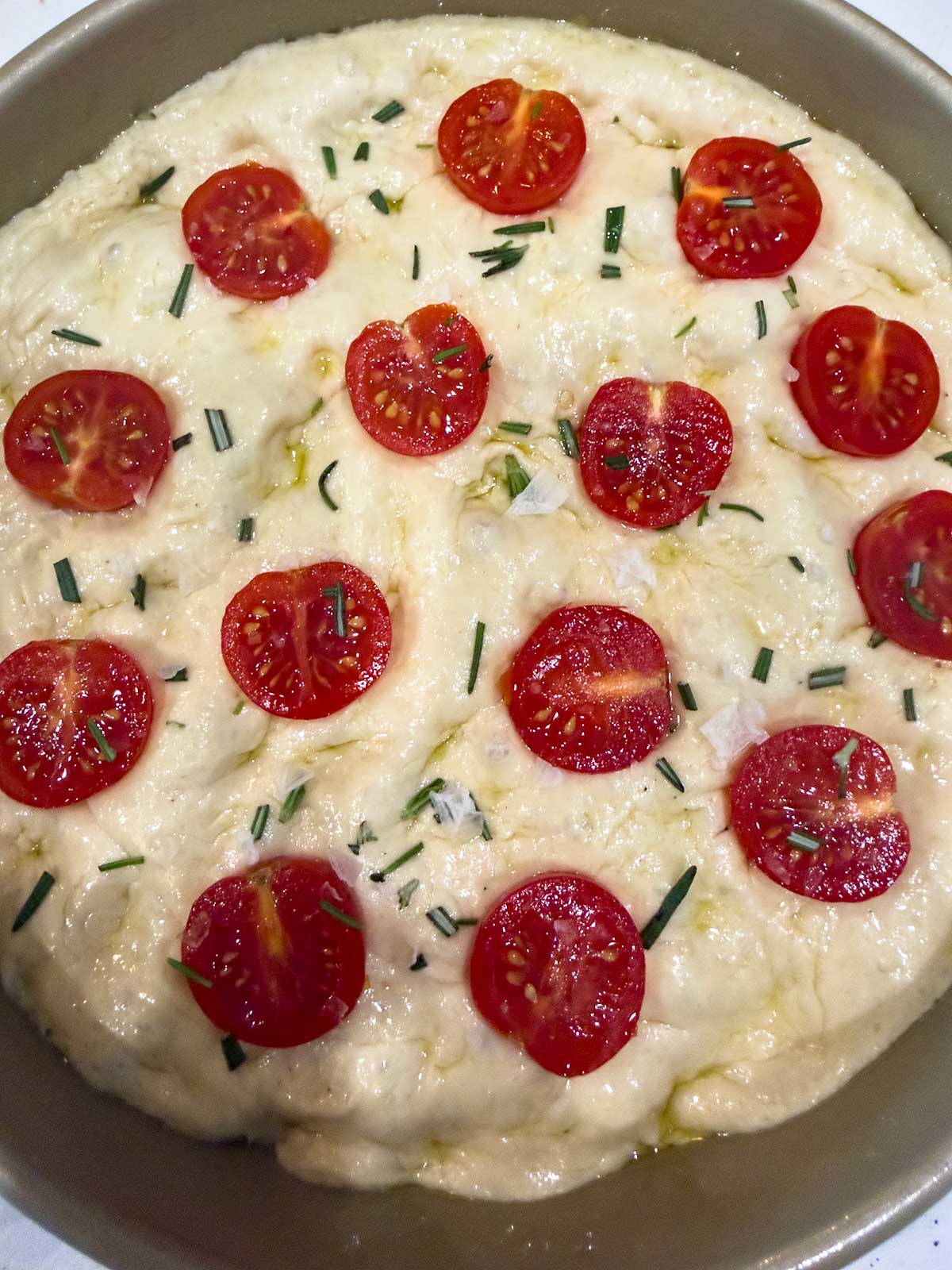
- Coat your fingers with oil, and gently press the dough to dimple it.
- Top with the cherry tomatoes, rosemary, and salt.
- Bake for 20 t0 24 minutes. Transfer to a wire rack.
- Let it cool on a wire rack before cutting.
-

Leave a Comment & Rate this Recipe