
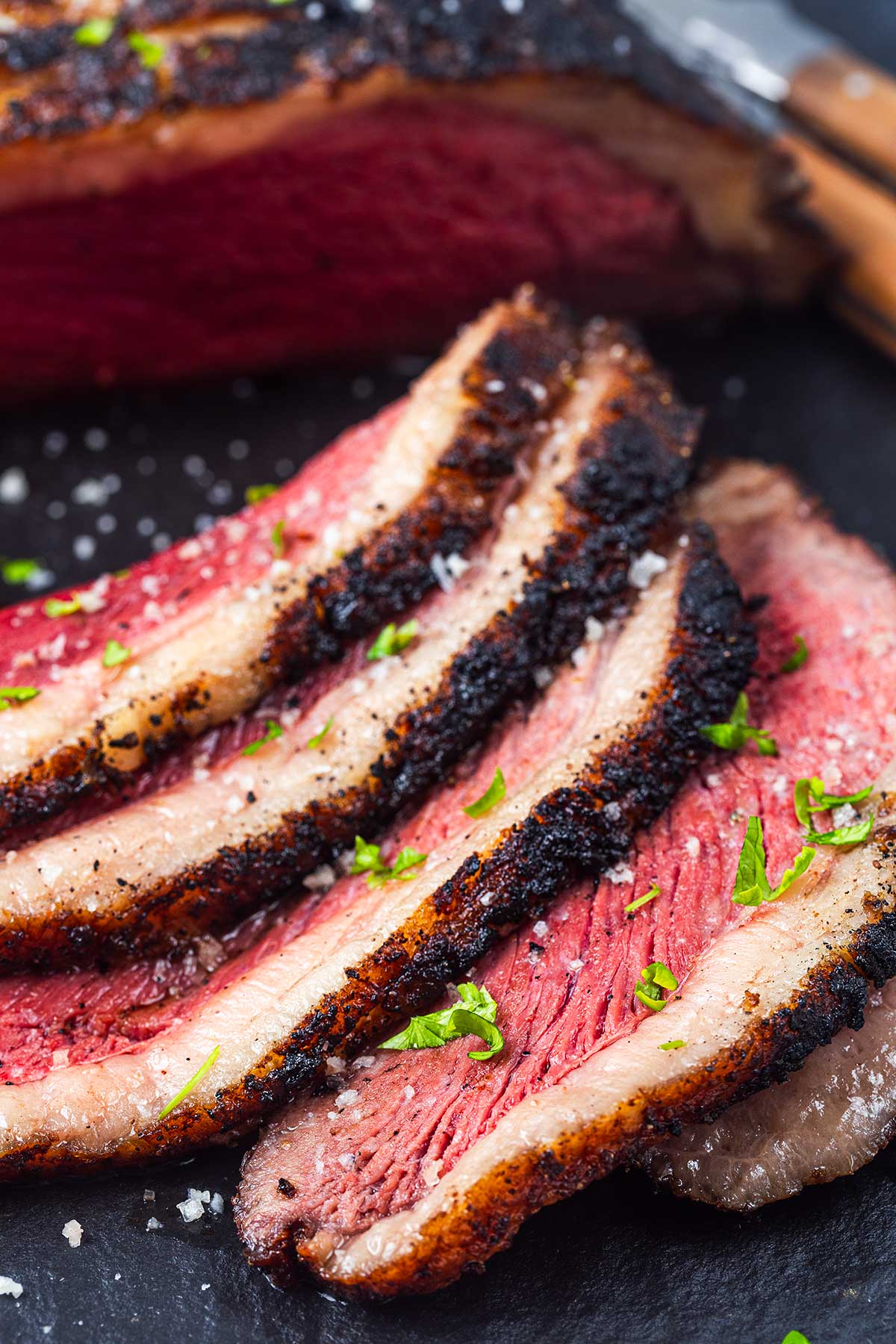
Reverse seared picanha will make you the star of your next cookout. We start by grilling or smoking the picanha over low heat. After a short rest, we sear it. The result is a roast that is pink from edge to edge, with a charred fat cap you'll fight over.
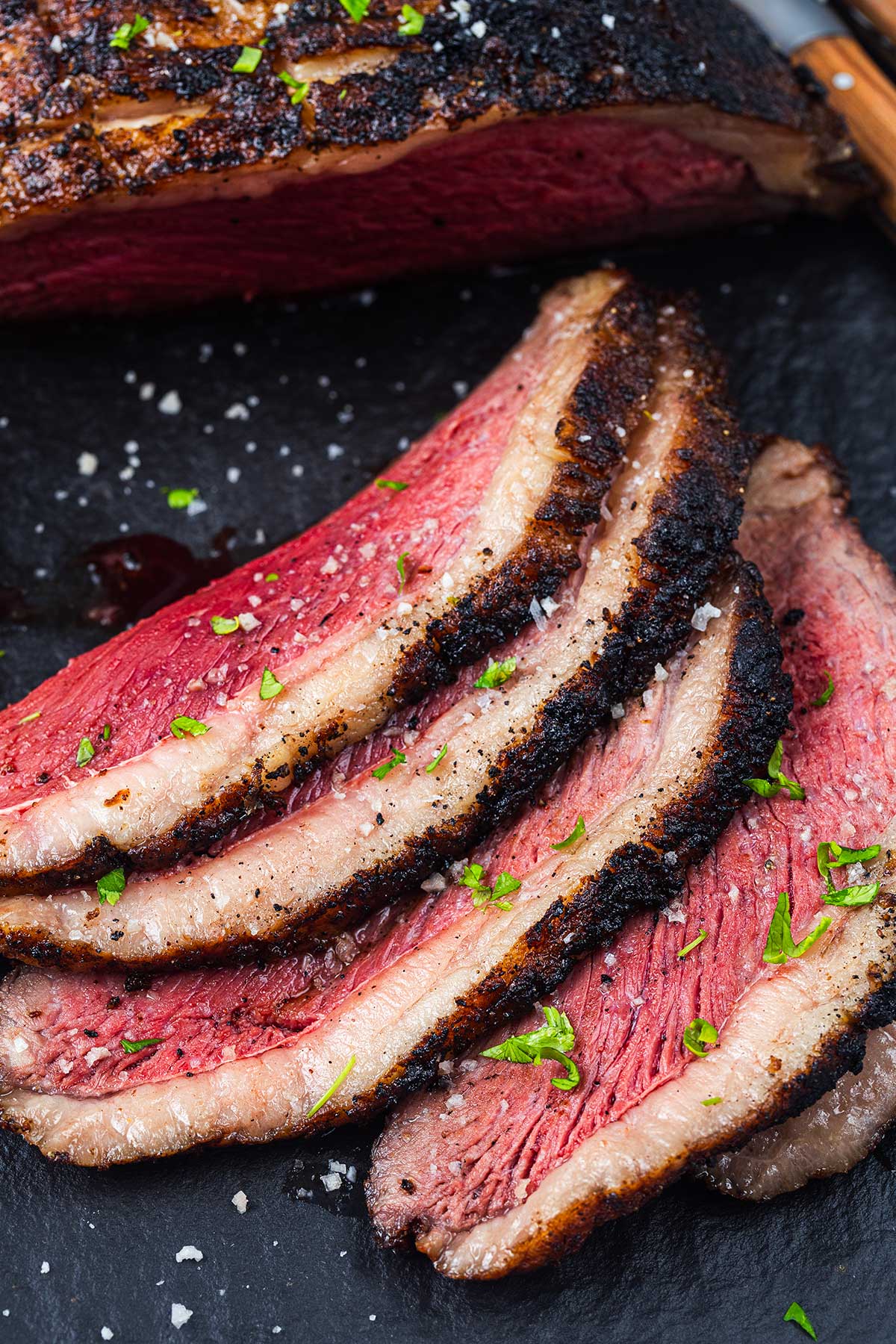
Picanha is the cut I reach for when I'm entertaining, and ribeye prices make me flinch.
The fat cap means it is loaded with deep, beefy flavor, and it reverse sears beautifully. Served with maple Brussels sprouts and sous vide potatoes, it is a meal that never fails to satisfy.
You may have tried this method with my reverse-seared steak, reverse-seared tomahawk ribeye, reverse-seared trip tip, or even my reverse-seared prime rib.
One thing to remember. The internal temperature of the roast matters more than the clock. Make sure you have an instant-read thermometer on hand.
This post contains affiliate links. As an amazon associate, I earn from qualifying sales.
Where to Get Picanha
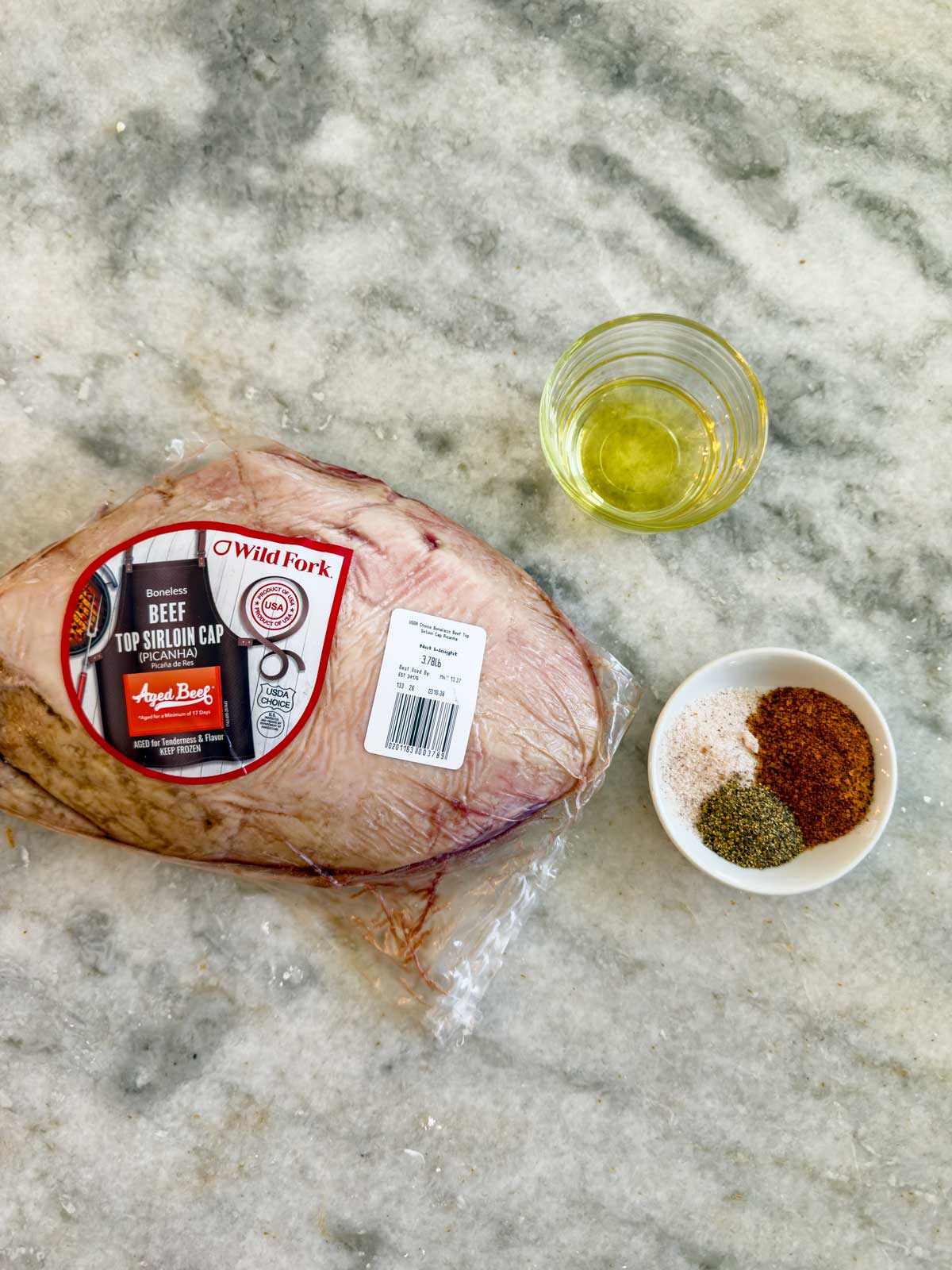
You can find picanha at Costco, a good butcher, or Wild Fork. I've yet to find one in my grocery store. Make sure you buy one with the fat cap still attached.
If you'd rather use another cooking method, I’ve got a Sous Vide Picanha, Picanha Steaks, and a Picanha Roast, too.
Why Slow Cook First, Then Sear
If we started over high heat, the edges of our roast would go gray before the center was cooked through. On a roast of this size, we would end up with the dreaded grey band effect. With the reverse sear method, we cook the whole roast slowly, so it cooks evenly. Then you hit it with high heat at the very end, just for the crust.
Smoked picanha done this way stays pink edge to edge.
Score the Fat Cap
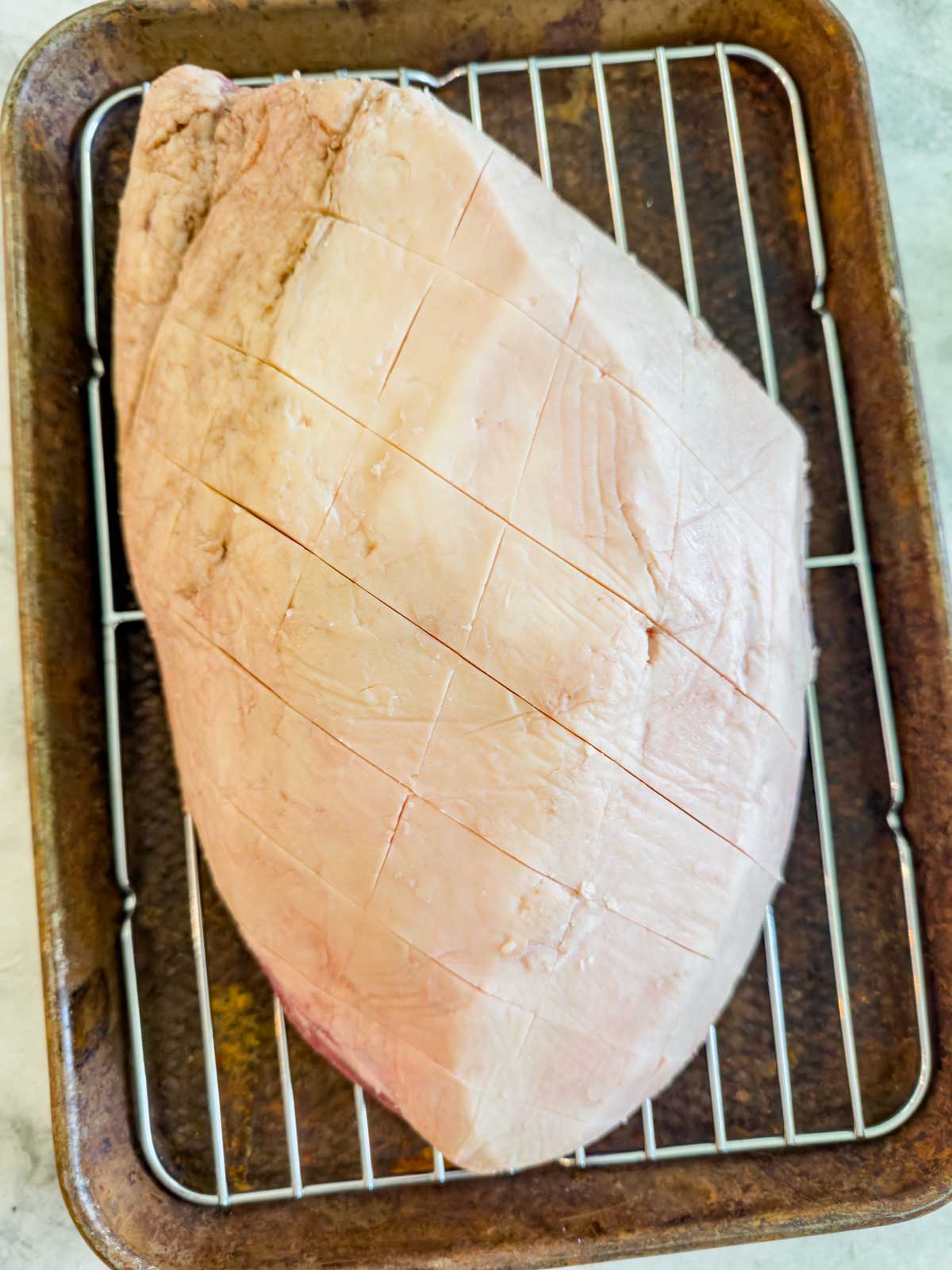
Before anything else, score the fat cap.
To do this, take a sharp knife and cut into the fat cap about a quarter inch deep. Space your cuts three-quarters of an inch apart, but you don't have to get fussy about the spacing. Then turn the roast and cut the other way, so you end up with a crosshatch of little diamonds.
Why bother? A solid slab of fat renders slowly and stays floppy. Score it, and the heat gets down into the fat, giving you crispy ridges. Just keep your knife in the fat. You're not trying to cut into the meat underneath.
Salt It the Night Before
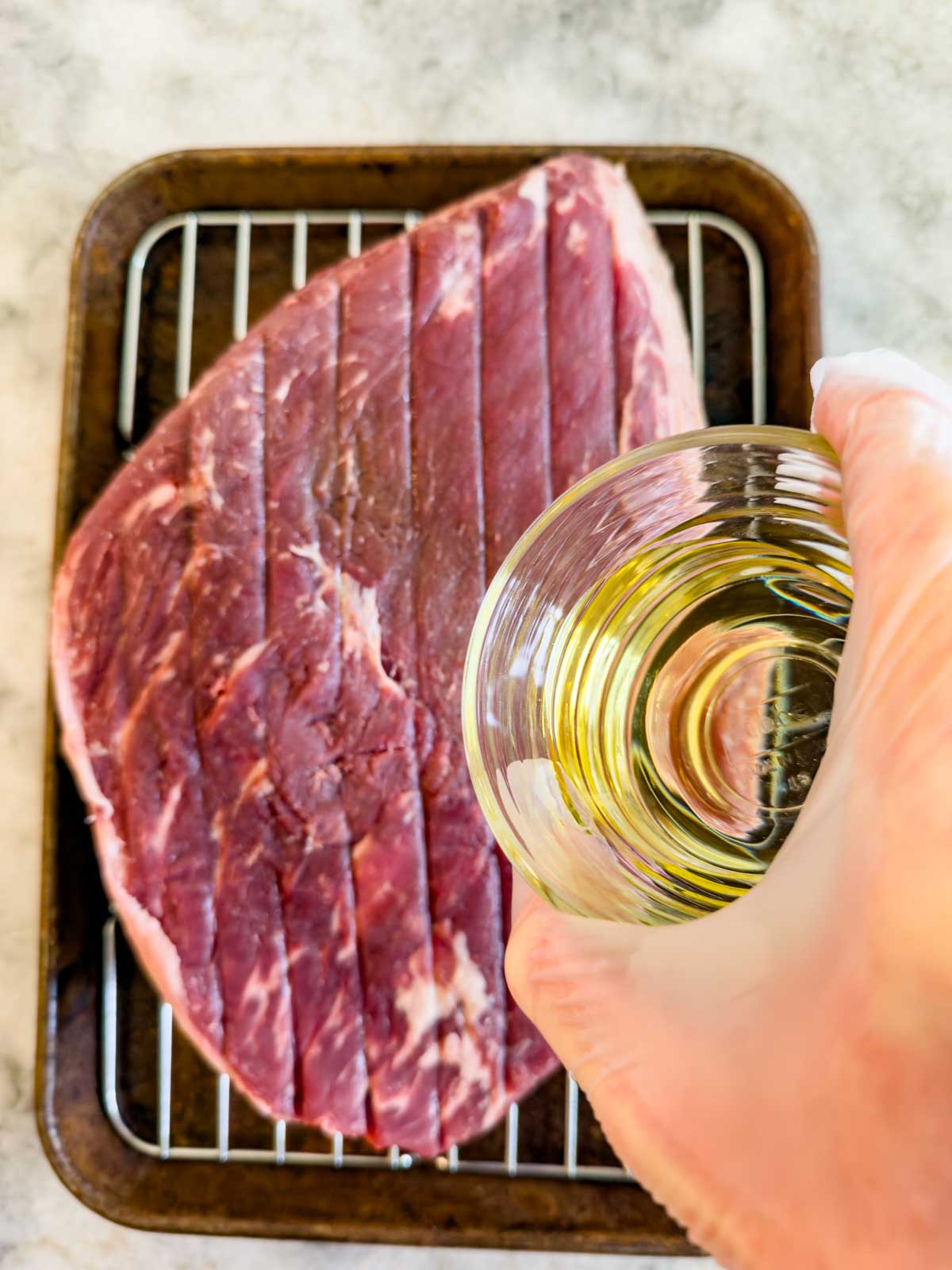
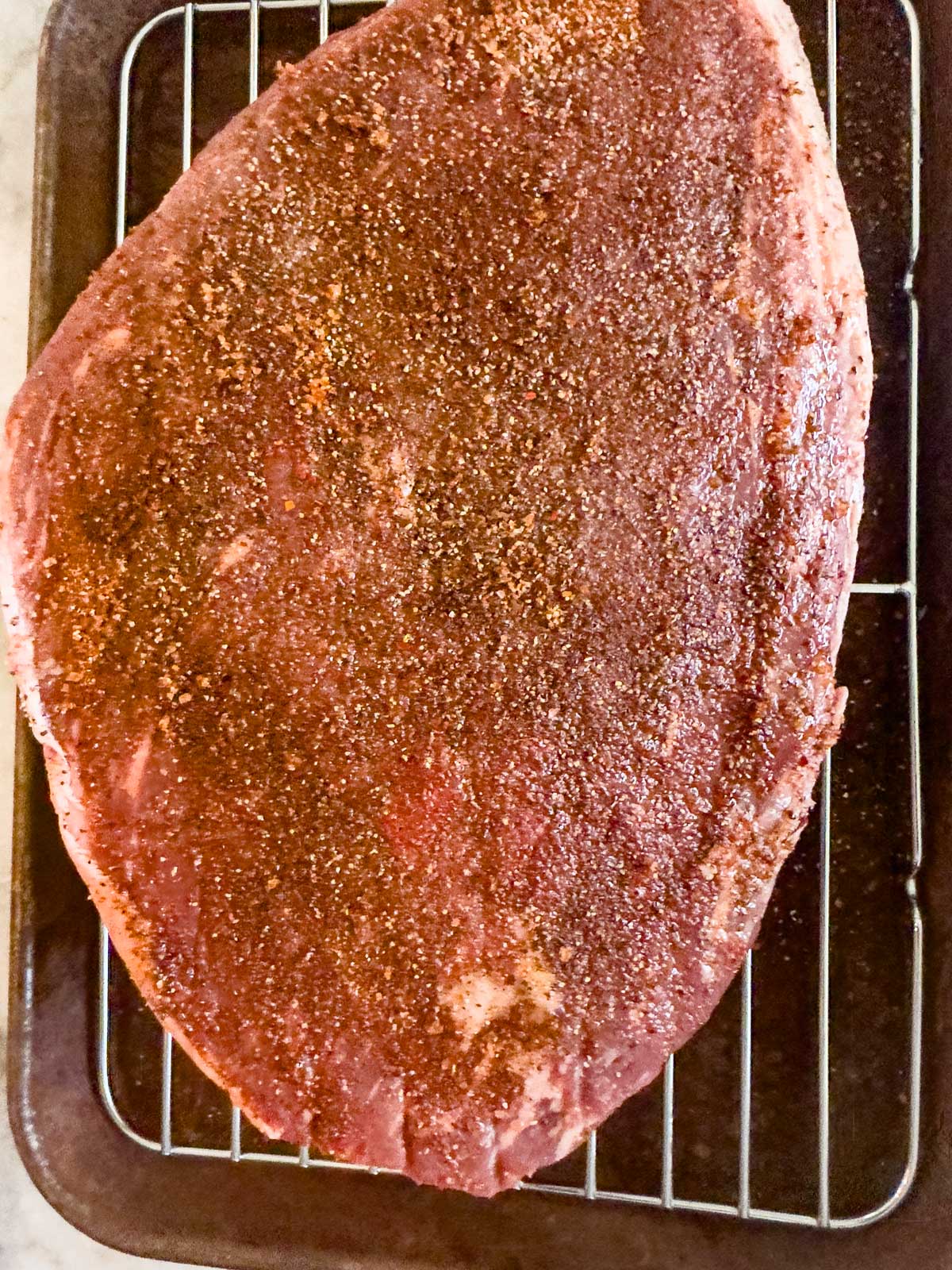
I season picanha and let it sit uncovered in the fridge overnight. The salt works its way into the meat and seasons it all the way through. And the surface dries out, which is exactly what you want for a good crust later on.
Set the roast on a wire rack over a baking sheet so air moves all around it. Short on time? An hour on the counter will do. But if you can plan ahead, the overnight rest is worth it.
Smoke Low and Read the Temp, Not the Clock
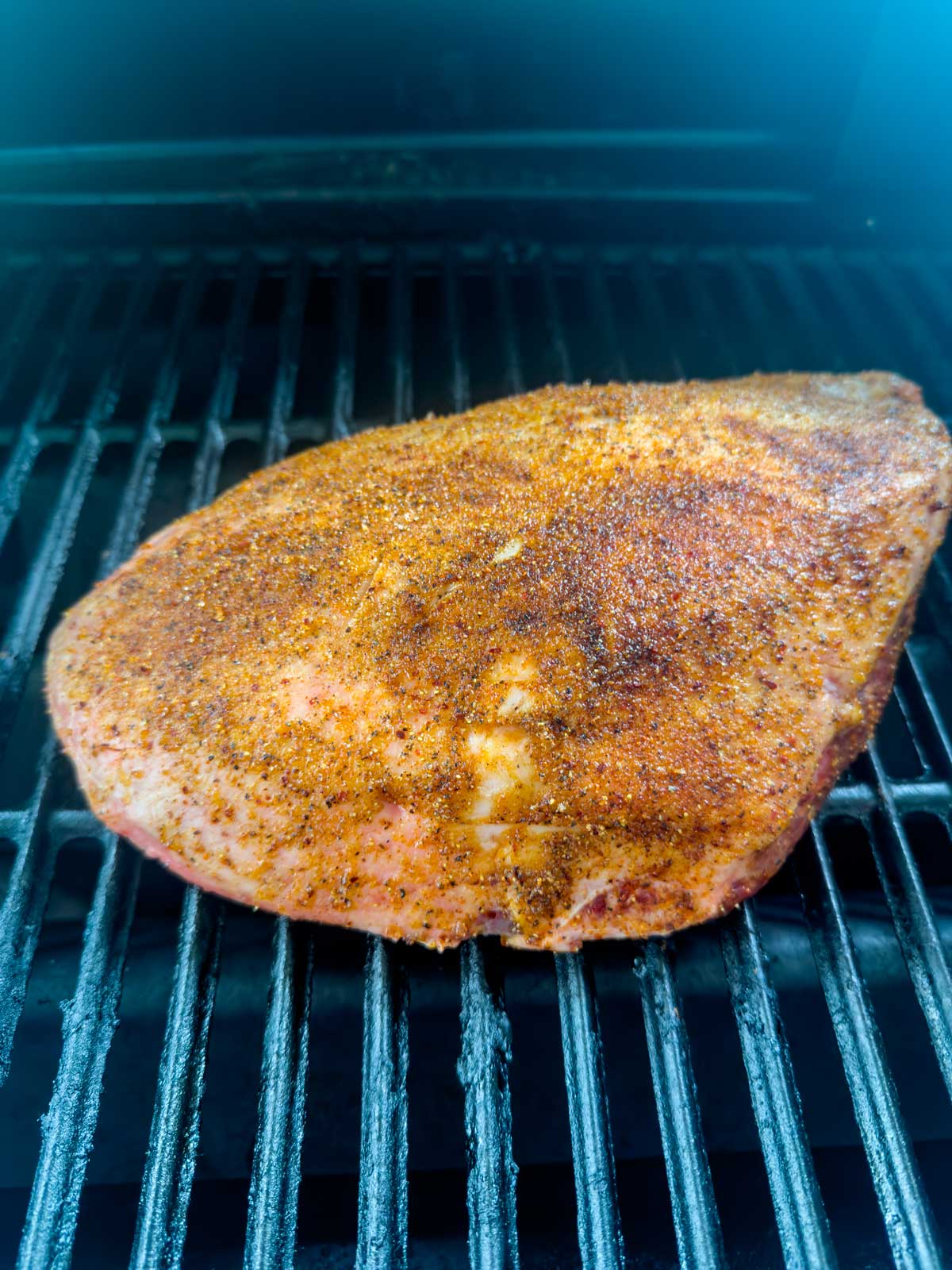
Set your smoker or grill to 250°F. Ninja Flex Flame, pellet grill, Traeger, plain old kettle, whatever you run. They all get there. Cook the picanha low and slow until the inside hits 100°F. On most setups, that's about an hour.
Here's where I'll say it again. Watch the thermometer, not the time. Every grill runs a little differently. A Ninja Flex Flame, for one, moves faster because of its convection fan, so yours might hit 100°F closer to the 50-minute mark. (I think the Flex Flame is going to be under a lot of trees this Christmas, and for a cook like this, it earns the spot. I love mine.) The number on your instant-read is the truth. The clock is just a rough guess.
Want smoke flavor? This is your window to add it. Oak is the classic churrasco move, and it's tough to beat. Pecan runs a little sweeter. A light hand with hickory works too. Go easy on mesquite, though. At full blast, it can turn that gorgeous fat cap bitter.
Rest Before You Sear
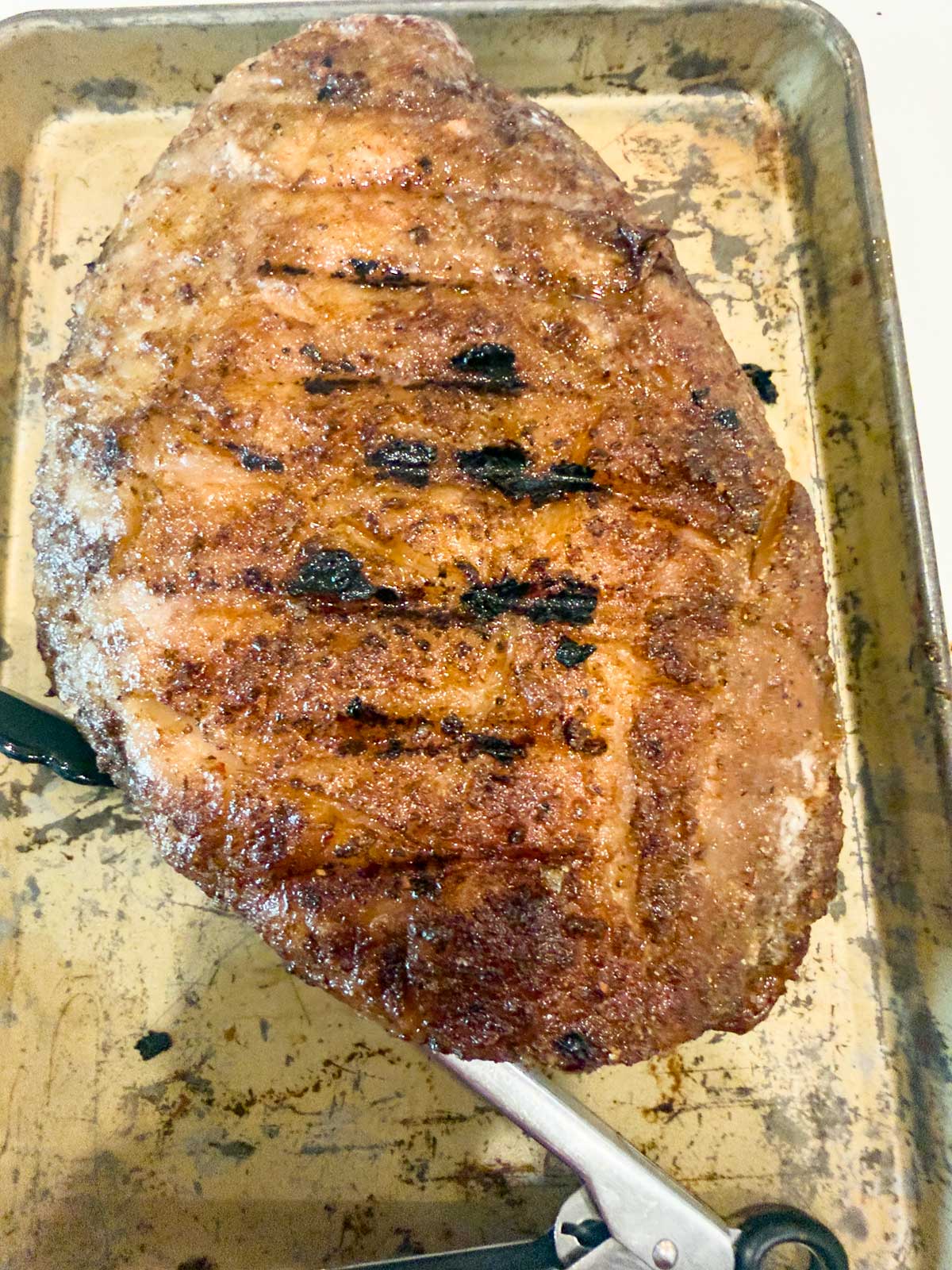
Pull the picanha off the heat at 100°F and let it sit, uncovered, for 10 minutes. Don't skip this one. It's tempting to read it as dead time, but it's doing real work.
While it rests, the surface keeps drying and cools down just a touch. Both of those hand you a better crust when you sear. A wet, hot surface steams instead of browning. A slightly drier one crisps. Use this time to preheat the grill.
Sear It
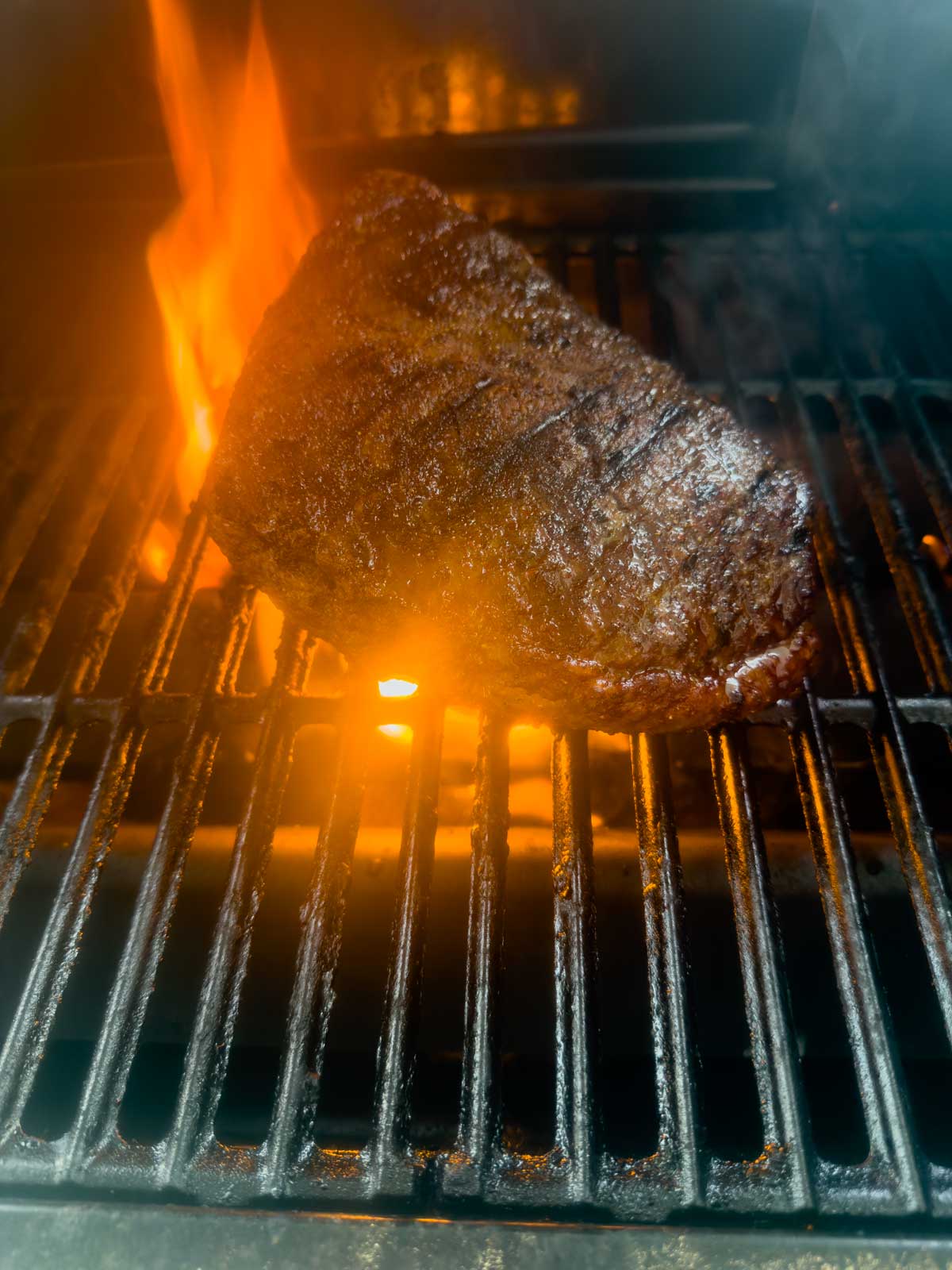
Now turn the heat all the way up to 500°F. Get it truly ripping. Lay the picanha down and sear about 3 minutes per side. Give the fat cap its own time against the grates so it renders and crisps up.
Pull it when the instant-read reads 130°F in the thickest part for medium rare once it rests. The sear moves quickly, so stay close. This is not the moment to wander off for a phone call.
Rest Again
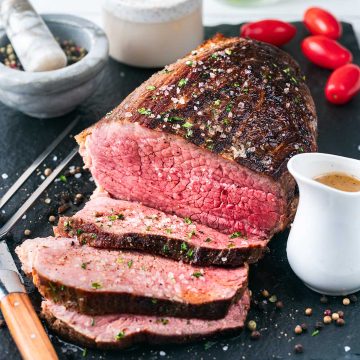
Tent the picanha loosely with foil and rest it one more time, 10 minutes. Cut into hot meat right off the fire and all those juices run out onto the board. When it is time to slice, slice the roast against the grain.
Reverse Seared Picanha (Smoker, Flex-Flame, or Grill)
Ingredients
- 1 3 - 4 pound picanha roast
- 2 tablespoons avocado oil
- 1 tablespoon sea salt
- 1 tablespoon steak seasoning
- 1 teaspoon freshly ground black pepper
Instructions
- Dry the picanha with paper towels.
- Using a sharp knife, score the fat cap of the piranha ¼-inch deep every ¾ inch. Now work in the other direction to create a crosshatch pattern. Oil the roast.
- Mix the seasonings in a bowl, and spread over the outside of the roast. Place on a wire rack set on top of a baking sheet and refrigerate uncovered overnight. (You can also let it sit at room temperature for an hour if you are short on time.)
- Preheat your smoker or grill to 250°F. Cook for about an hour, until the internal temperature is 100°F. {Note: For a Ninja FlexFlame, this will be about 50 minutes due to the convection fan. Always use an instant-read thermometer, not the time.}
- Remove the picanha from the heat and let rest uncovered for 10 minutes.
- Turn the heat up to 500°F. Sear about 3 minutes per side, until an instant-read thermometer is 130°F.
- Tent with foil, and allow to rest for 10 minutes before slicing.
Leave a Comment & Rate this Recipe